Partial knee replacement
In appropriately selected patients, only the affected compartment is resurfaced while unaffected parts of the knee are preserved.
 PROF. DR. SAMMY HANNAMD · FACS · FRCS (TR&ORTH) · CCT (TR&ORTH)
PRIMARY KNEE REPLACEMENT · ABU DHABI
Primary knee replacement includes partial and total knee replacement. The choice is not made from one X-ray alone: symptoms, function, the distribution of arthritis, alignment, ligament status, general health and personal goals all matter. Primary knee replacement in Abu Dhabi is performed at Healthpoint Hospital, serving patients throughout the UAE.
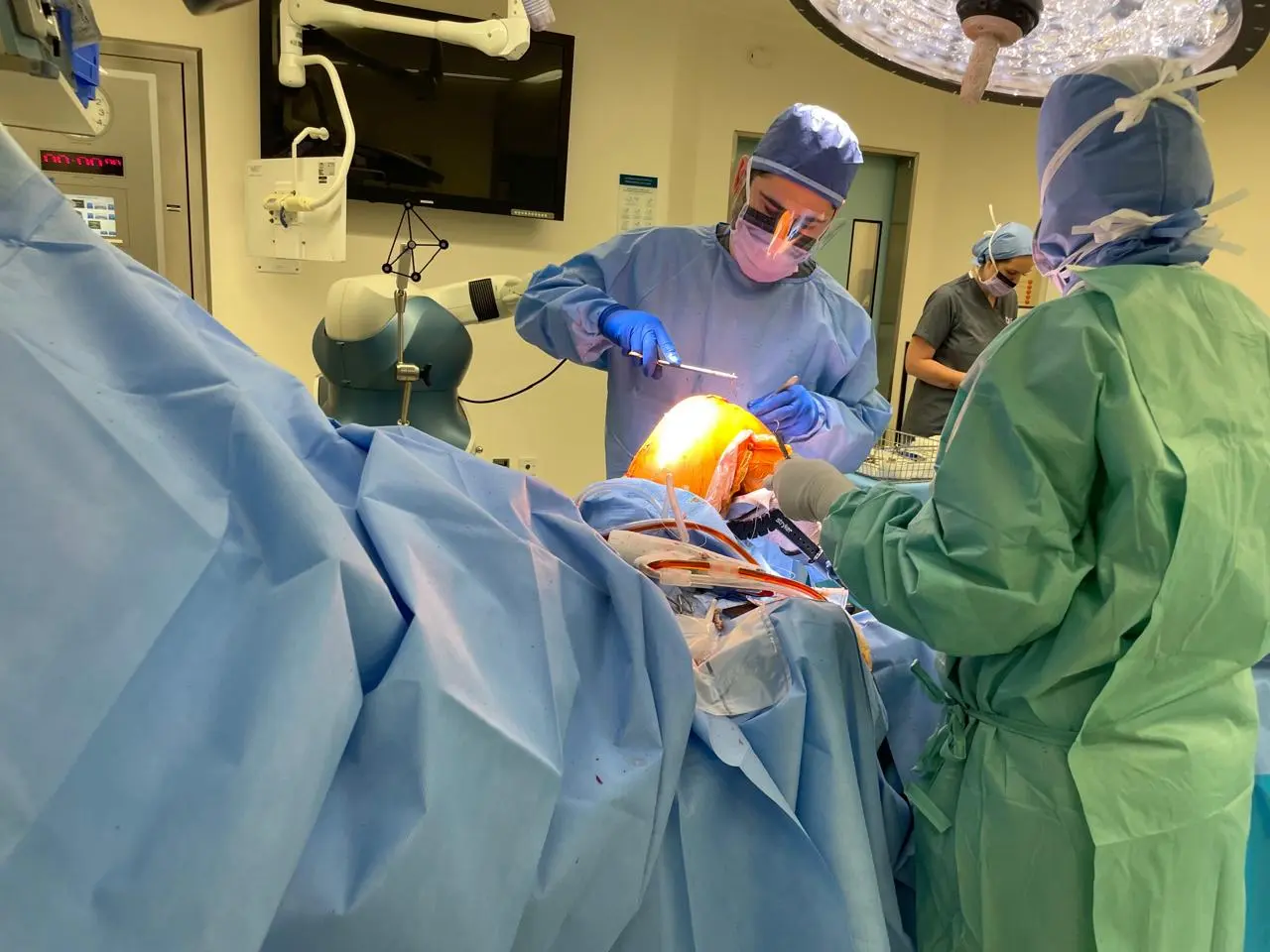
CHAPTER 01 · PARTIAL OR TOTAL?
Partial and total knee replacement are different operations for different patterns of joint disease. The aim is to match the reconstruction to the knee—not to force every patient into the same procedure.
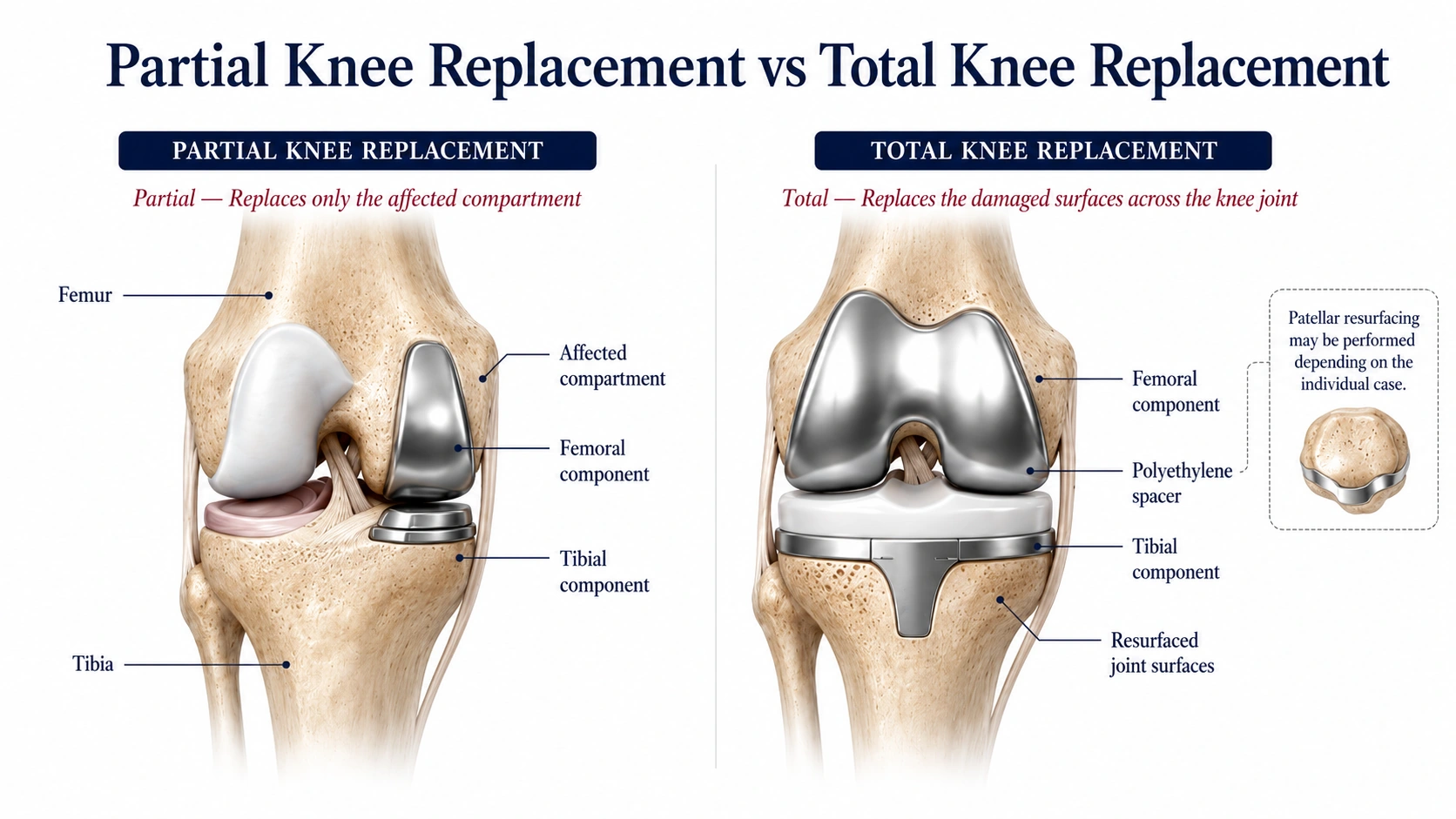
In appropriately selected patients, only the affected compartment is resurfaced while unaffected parts of the knee are preserved.
The damaged femoral and tibial joint surfaces are resurfaced across the knee using femoral, tibial and polyethylene components.
CHAPTER 02 · SUITABILITY
Age alone does not decide suitability. The consultation brings together the diagnosis, level of functional limitation, previous treatment, imaging and the factors that may influence recovery.
The symptoms, examination and imaging should tell a coherent story before replacement is discussed.
Walking, stairs, sleep, work, exercise and independence help define the real burden of the knee problem.
A truly localised compartment pattern may support a partial replacement discussion; broader disease may favour total replacement.
Stability, deformity, range of motion and ligament function influence whether a partial strategy is appropriate.
General health, medications, smoking, diabetes, weight where relevant, home support and rehabilitation planning can affect risk and recovery.
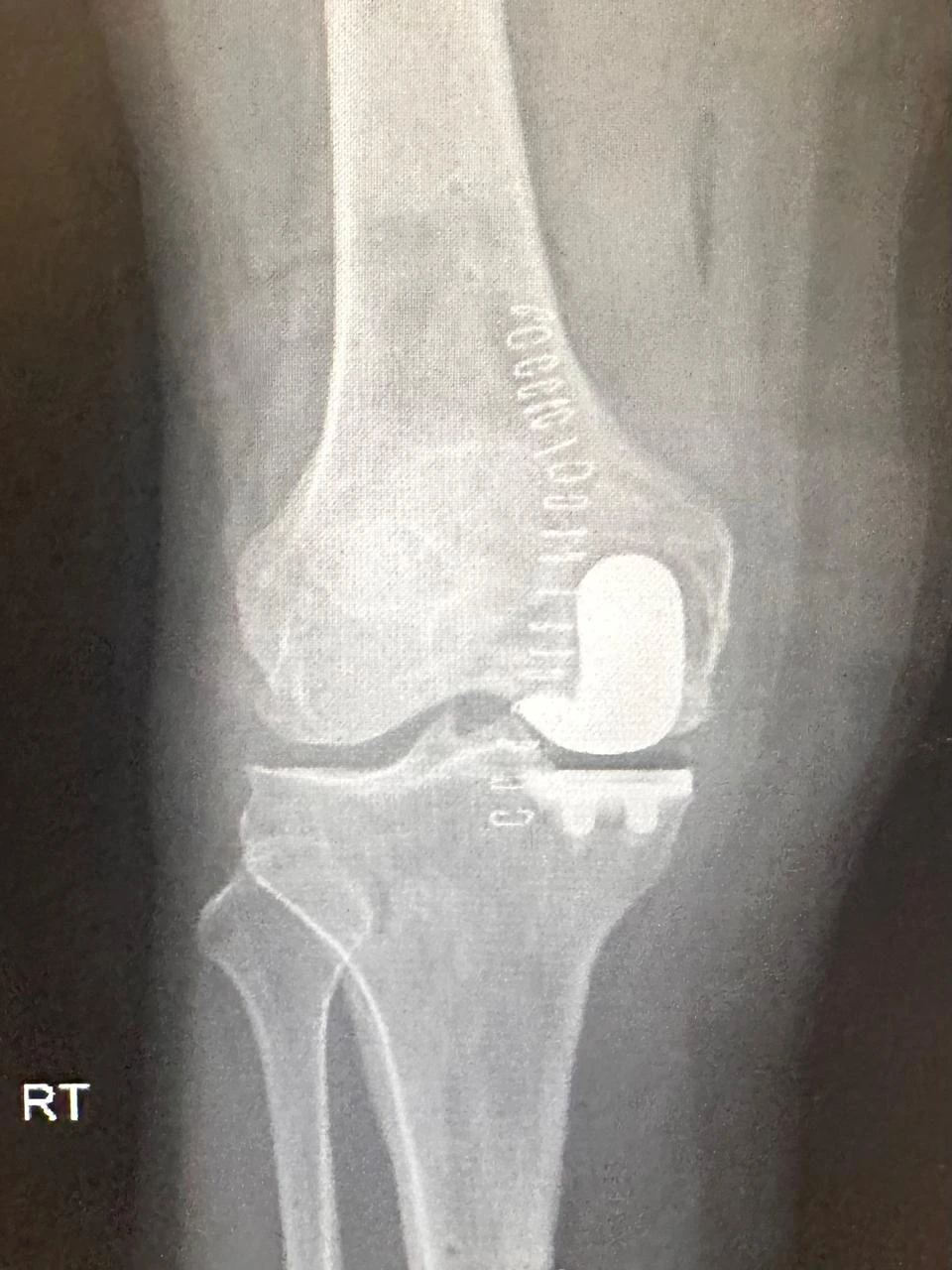
“Suitability is a clinical decision. The X-ray helps describe the knee; it does not make the decision by itself.”
CHAPTER 03 · REAL POSTOPERATIVE X-RAYS
These clinic-supplied examples illustrate different postoperative appearances. They are educational examples only; an X-ray cannot establish whether a particular procedure is suitable for another person.
Only one tibiofemoral compartment has been resurfaced; the remaining joint surfaces are preserved.
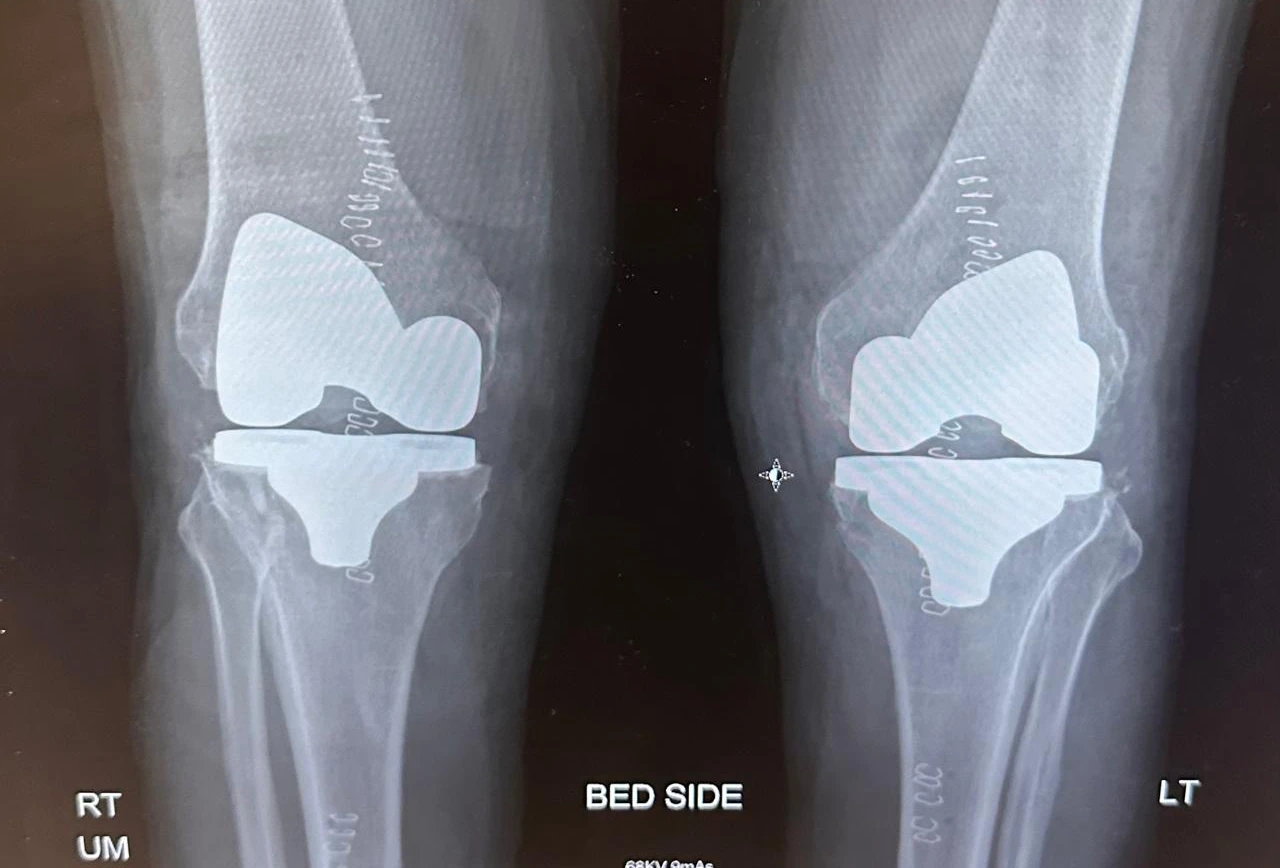
Femoral and tibial components resurface the main joint surfaces. Postoperative films are also used to document component position and alignment.
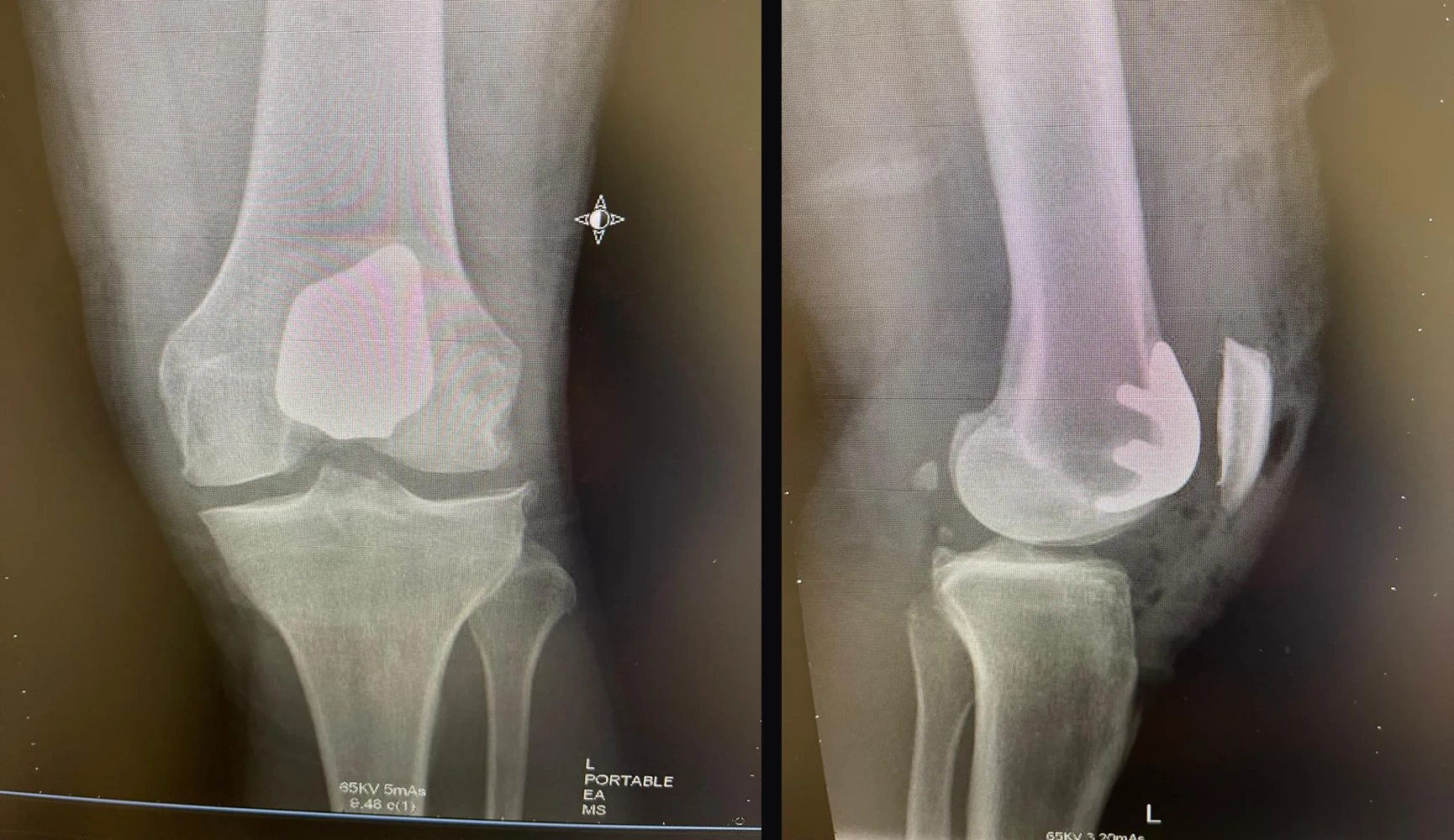
In selected cases where disease is isolated to the kneecap and trochlear compartment, a compartment-specific replacement may be considered.
CHAPTER 05 · THE OPERATION
During primary knee replacement, the damaged joint surfaces are prepared and the planned components are positioned. The exact steps differ between partial and total replacement, and the surgeon checks alignment, stability, movement and soft-tissue balance before completing the procedure.
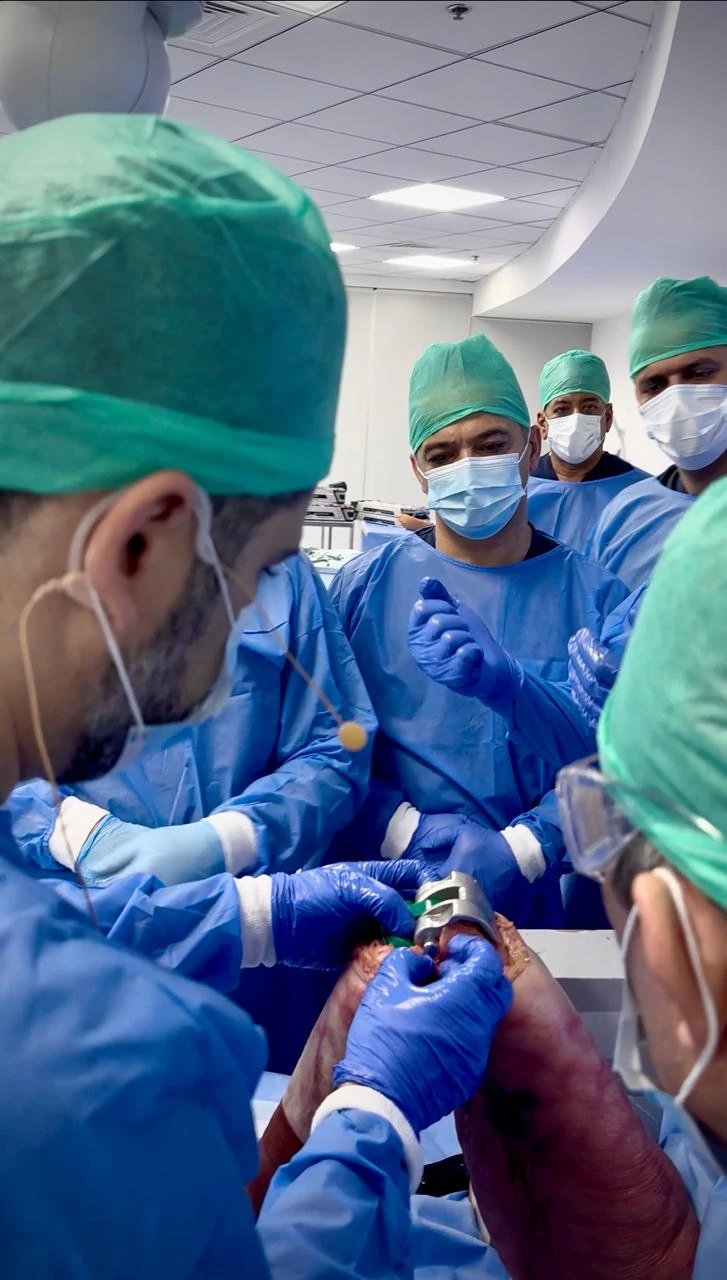
Damaged bone and cartilage are prepared according to the selected partial or total replacement plan.
Implant components are positioned to reconstruct the planned joint surfaces and alignment.
Movement, stability and soft-tissue balance are assessed before final components are accepted.
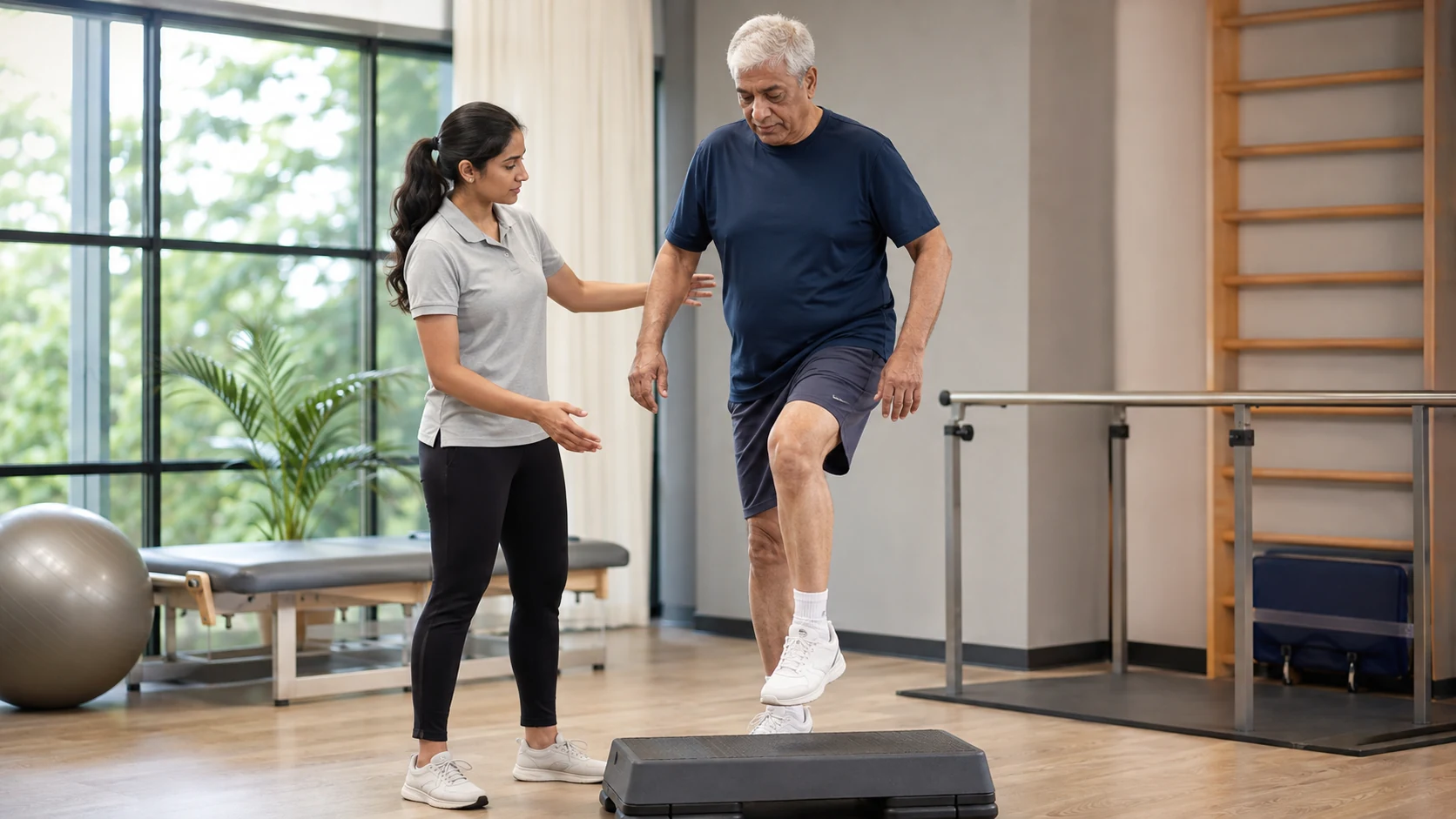
The postoperative plan moves quickly toward safe mobility, swelling control and progressive rehabilitation.
RECOVERY · FUNCTION
Early rehabilitation focuses on safe mobility, swelling control and restoring useful movement. Strength, endurance and confidence are rebuilt over time according to the individual operation, starting point and goals.
RELATED SURGICAL ROUTES
Use the related pages when technology, an existing implant or an earlier stage of arthritis is the main question.
PRIMARY KNEE REPLACEMENT FAQ
General information only. The appropriate operation, implant strategy and recovery plan require an individual clinical assessment.
Request an appointmentPartial knee replacement resurfaces only the affected compartment in appropriately selected patients. Total knee replacement resurfaces the damaged femoral and tibial joint surfaces across the knee.
The decision depends on the distribution of arthritis, symptoms and function, examination findings, alignment, ligament status, imaging, general health and personal goals.
No. Robotic assistance is a technology that may support three-dimensional planning and intra-operative guidance during selected partial or total knee replacement procedures. Read the dedicated robotic guide.
No. Patellar resurfacing is not automatic and is decided according to the individual knee and the surgeon's operative assessment.
Mobilisation commonly begins early after surgery with guidance from the clinical and rehabilitation team. The exact timing and use of walking aids depend on the individual.
Recovery is progressive and varies. Early goals include safe mobility and swelling control, followed by range of motion, strength, endurance and return to meaningful everyday activities.
A SURGICAL DECISION, INDIVIDUALISED
You do not need to decide between partial, total or robotic-assisted surgery before the consultation. Bring previous imaging, treatment history, the symptom timeline and the activities you want to regain.

CONSULT THE SPECIALIST
Prof. Hanna is a UK board-certified consultant orthopaedic hip and knee surgeon at Healthpoint Hospital, Abu Dhabi, with clinical interests including primary and revision joint replacement, partial knee replacement and robotic-assisted hip and knee replacement.
 Google ReviewsIndependent patient feedback
 DoctifyVerified patient feedback