HIP CARE · ABU DHABI

Hip pain is not one problem.The pattern guides the route.

Hip symptoms can arise from the joint itself, the labrum and surrounding soft tissues, or an existing hip replacement. The starting point is where the pain is felt, what movements provoke it, how function has changed and which findings actually explain the problem. Rated among the best hip surgeons in Abu Dhabi, he treats patients from across the UAE at Healthpoint Hospital.

01

One Hip hub. Four detailed routes. Start here, then move directly to the page that matches the clinical question.

Older adult walking confidently outdoors, representing mobility and the broad Hip care pathway
One Hip starting point — from symptoms and assessment to preservation or replacement when appropriate.

A NAVIGATOR, NOT A DIAGNOSIS

Read the hip pattern.

Choose the description closest to the problem. The result points to the most useful information page; symptoms alone cannot confirm a diagnosis or determine whether surgery is appropriate.

Hip, back and soft-tissue symptoms can overlap. Examination and selective imaging help separate the source.

GRADUAL JOINT PATTERN

Groin pain and stiffness that build with walking or everyday movement.

This pattern may be associated with hip osteoarthritis or another joint problem. The arthritis route explains how symptoms, function, examination and X-rays are considered together.

Explore hip arthritis Educational navigation only. Symptoms alone cannot confirm a diagnosis.

FOUR DETAILED HIP ROUTES

Go deeper only where it is useful.

The Hip hub explains the overall landscape. These four pages carry the detail, so there is no extra grandparent or duplicate surgery parent between you and the information you need.

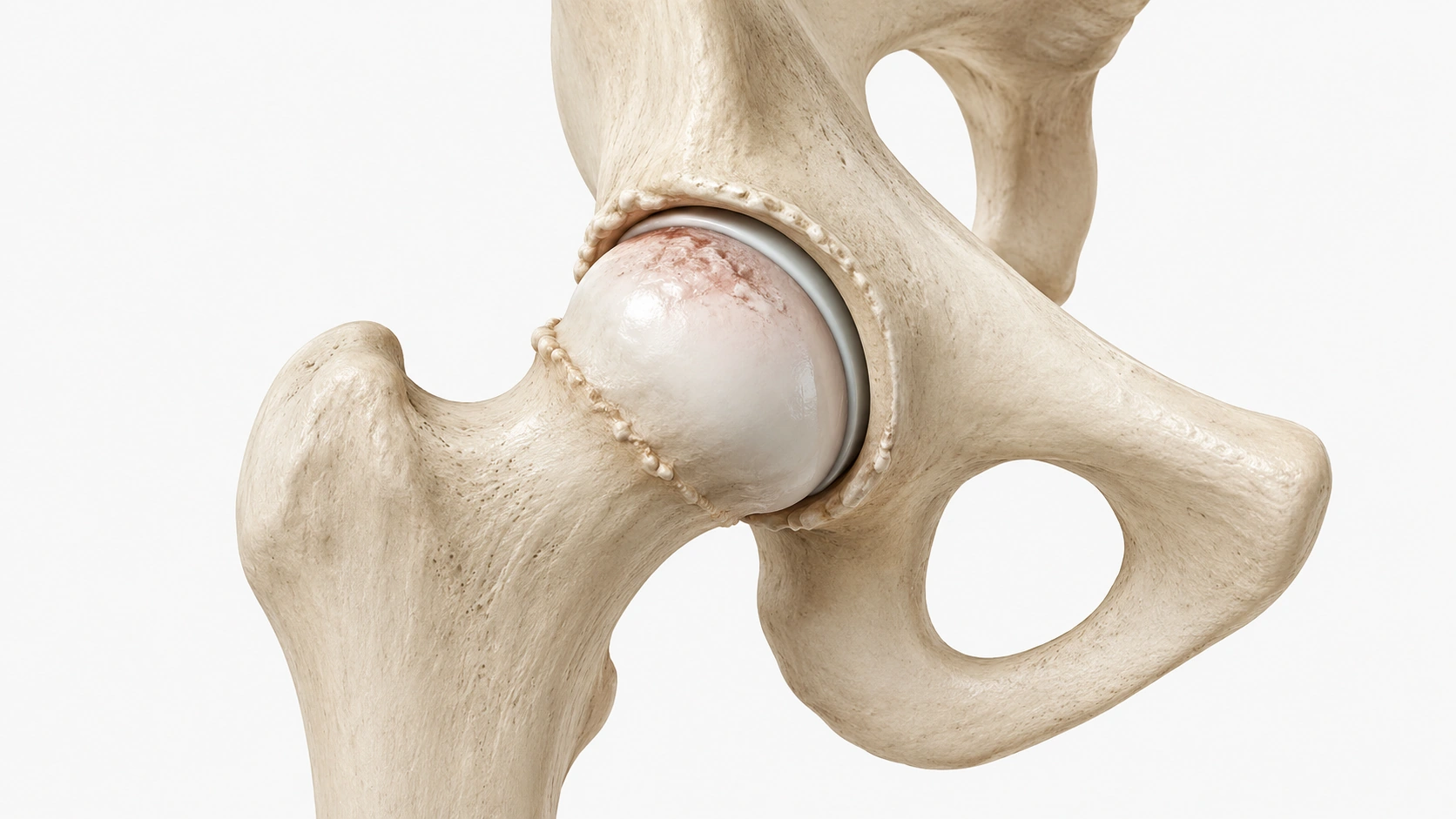
Medical illustration of degenerative changes in a hip joint affected by osteoarthritis
01

GROIN PAIN · STIFFNESS · WALKING

Hip arthritis

Hip osteoarthritis can cause pain and stiffness that gradually make everyday tasks harder, including walking, standing from a chair, getting in and out of a car, or reaching shoes and socks.

Assessment considers symptoms, movement, function and X-rays where useful. Arthritis on imaging does not by itself determine treatment, and it does not automatically mean replacement.

  • Groin or thigh pain
  • Stiffness and reduced movement
  • Walking or daily tasks becoming harder
Open the hip arthritis guide
02

GROIN · FLEXION · ROTATION · CATCHING

Hip impingement & labral problems

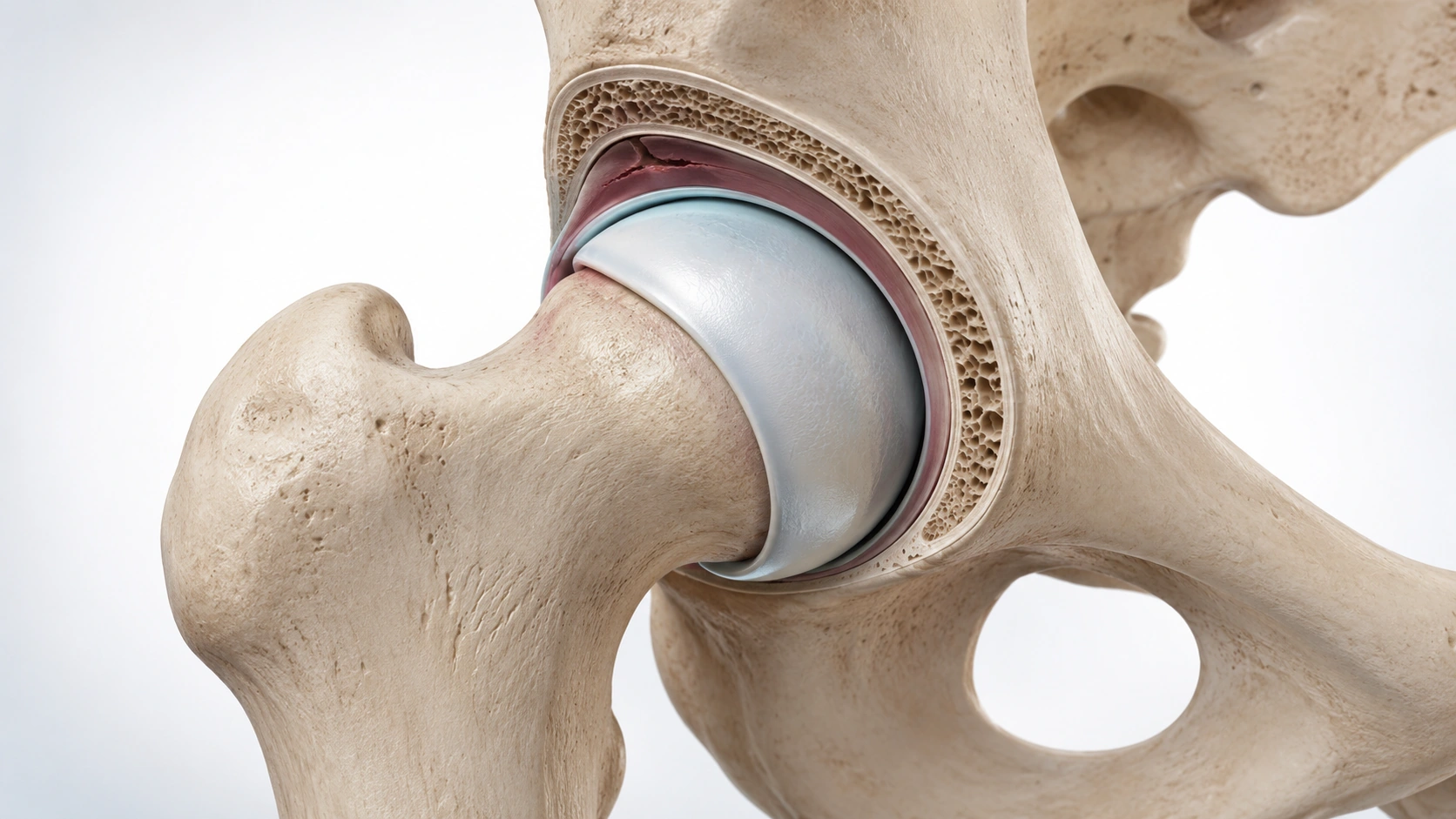
Femoroacetabular impingement describes a shape-related conflict between the ball and socket that can irritate the joint during movement. Labral symptoms may overlap with other causes of groin pain.

The key question is whether the history, examination and imaging tell the same story. A labral abnormality on a scan does not automatically mean surgery is required.

  • Deep groin pain
  • Pinching in flexion or rotation
  • Clicking, catching or activity-related symptoms
Open the impingement & labral guide
Medical illustration of the hip labrum and a superior labral injury
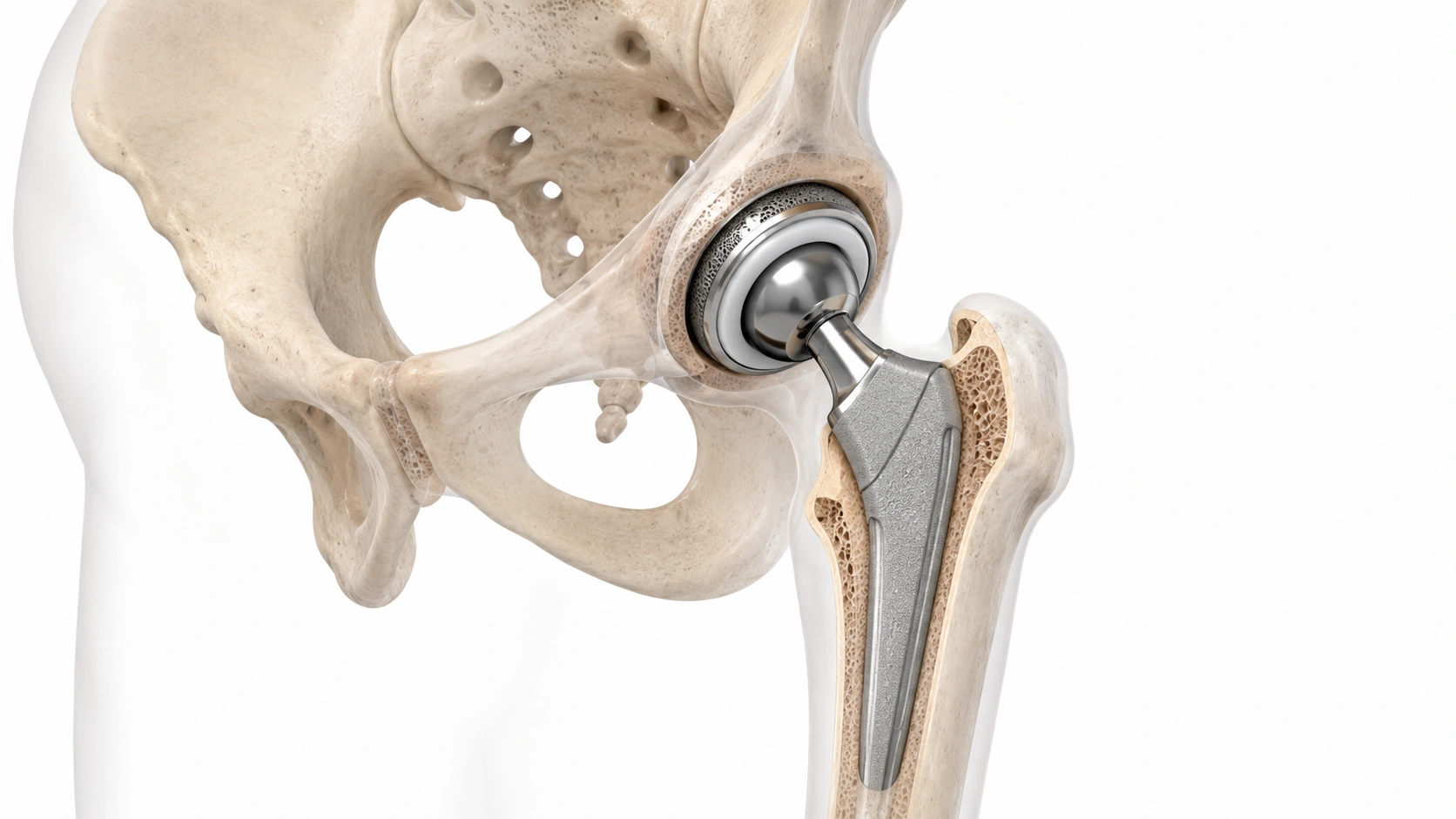
Medical illustration of a total hip replacement with acetabular and femoral components
03

ESTABLISHED JOINT DAMAGE · DAILY FUNCTION

Primary hip replacement

Total hip replacement replaces the damaged ball-and-socket joint surfaces with prosthetic components. It may be considered when symptoms and loss of function remain substantial despite appropriate non-operative care.

The decision is individual. Planning considers the diagnosis, anatomy, health, activity goals, implant strategy and the recovery required after surgery.

  • Persistent pain and stiffness
  • Daily function significantly affected
  • Joint damage consistent with symptoms
Open the primary hip replacement guide
04

PREVIOUS REPLACEMENT · COMPLEX ASSESSMENT

Revision hip replacement

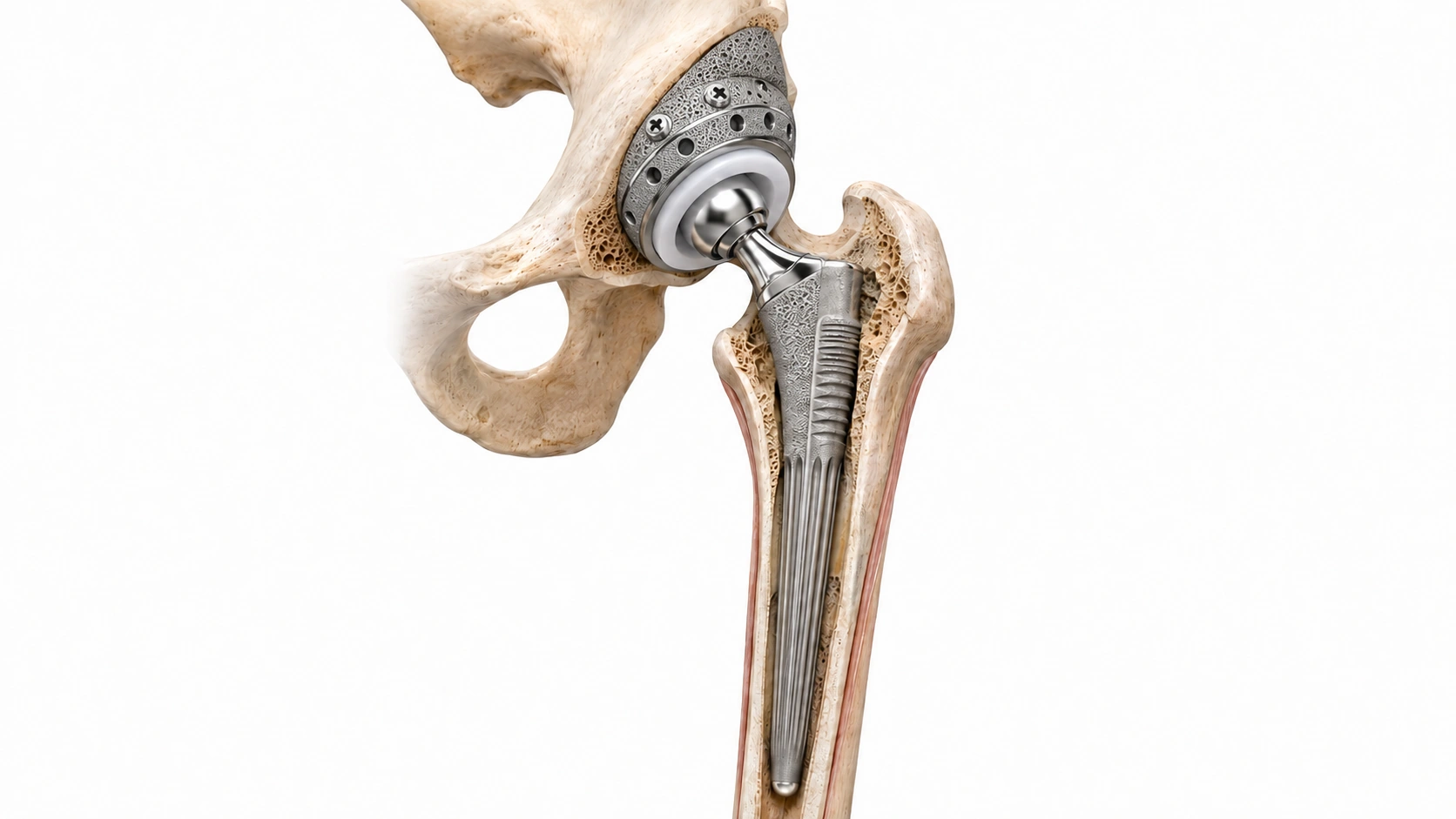
Revision surgery is considered when an existing hip replacement develops a significant problem. Causes can include loosening or wear, infection, recurrent instability or dislocation, fracture around the implant, or other implant-related failure.

Revision is generally more complex than primary replacement and may require additional imaging, laboratory tests, specialised implants and reconstruction of bone or soft tissue.

  • New pain in a replaced hip
  • Instability, fracture or implant concern
  • More complex reconstruction planning
Open the revision hip replacement guide
Illustrative revision hip replacement construct with specialised acetabular and femoral components

THE CLINICAL QUESTION SET

What the hip assessment needs to establish.

A scan can describe structure. A useful consultation also needs to determine whether the hip joint is the source, what is limiting function, and which findings genuinely change treatment.

Urgent symptoms? Sudden severe hip pain after a fall or injury, obvious deformity, inability to bear weight, or fever with a severely painful joint requires prompt medical assessment.

  1. 01

    Where is the pain felt?

    Groin, front of thigh, buttock or the outside of the hip can point the examination towards different structures.

  2. 02

    Which movements reproduce it?

    Walking, stairs, prolonged sitting, flexion, rotation, lying on one side or sport can provide useful mechanical clues.

  3. 03

    What has changed in function?

    Walking distance, sleep, shoes and socks, getting into a car, work and exercise show the real-world impact of the problem.

  4. 04

    Is the hip joint actually the source?

    Examination considers the joint alongside lateral soft tissues and possible referred symptoms from the back or pelvis.

  5. 05

    Which imaging will change the plan?

    X-rays, MRI or CT are selected to answer a defined question about arthritis, joint shape, labrum, bone or surgical planning.

TREATMENT MATCHED TO THE PROBLEM

The diagnosis sets the direction.

Treatment depends on the cause, severity, previous care, general health and the function a person wants to regain. Hip pain does not automatically progress towards surgery.

01

BUILD CAPACITY

Rehabilitation & load

Education, activity adjustment and targeted work on strength, mobility and movement may be central for many hip problems managed without an operation.

The programme depends on the diagnosis.
02

MANAGE SYMPTOMS

Non-operative options

Medication discussions and selected injections may be considered where appropriate alongside a clear diagnosis and a plan for activity and function.

Benefits and limitations should be discussed.
03

TREAT STRUCTURE OR JOINT

Preservation or replacement

Hip preservation procedures or joint replacement are considered only when the structural problem, symptoms and individual circumstances support that route.

The operation must fit the problem.

These are not automatic stages. The appropriate route may remain non-operative, combine approaches or change as the diagnosis becomes clearer.

HIP FAQs

Useful questions before you decide.

General information only. A personal diagnosis or treatment recommendation requires an individual clinical assessment.

Request an appointment
01Where is hip arthritis pain usually felt?

Hip arthritis commonly causes pain in the groin or front of the thigh with stiffness and reduced movement. Some people also feel symptoms in the buttock or around the side of the hip. Read the hip arthritis guide.

02Does groin pain always mean a labral tear?

No. Groin pain has several possible causes. Impingement and labral problems are possibilities, but the history, examination and imaging must be interpreted together. Explore impingement & labral problems.

03Do I need an MRI for hip pain?

Not always. X-rays may be the most useful first test when arthritis or joint shape is a concern. MRI or CT is selected when it can answer a specific question about the labrum, cartilage, bone or surgical planning.

04Does hip arthritis automatically mean replacement?

No. Treatment depends on symptoms, function, examination findings, imaging, health, previous treatment and goals. Many people are managed without surgery.

05When may primary hip replacement be considered?

It may be discussed when hip joint damage causes substantial pain, stiffness and loss of function despite appropriate non-operative care, and the overall assessment supports surgery. See primary hip replacement.

06Why might a hip replacement need revision?

Revision may be needed when an existing replacement develops a significant problem such as loosening or wear, infection, recurrent instability or dislocation, fracture around the implant, or another implant-related failure. See revision hip replacement.


Prof. Dr. Sammy Hanna, consultant orthopaedic hip and knee surgeon

YOUR HIP SPECIALIST

Consult Prof. Dr. Sammy Hanna.

Prof. Hanna is a UK board-certified consultant orthopaedic hip and knee surgeon at Healthpoint Hospital, Abu Dhabi, with specialist expertise in primary and complex hip replacement, joint reconstruction and evidence-led assessment of hip pain.

ONE HIP STARTING POINT

Still unsure which Hip route fits?

You do not need to diagnose the structure yourself. Bring the symptom timeline, previous imaging or treatment and the activities that matter to you; the assessment can organise the next step.

Book a hip consultation
Healthpoint appointments800 77
Chat with us