KNEE ARTHRITIS · ABU DHABI

Knee arthritis changes the joint.The decision depends on how it changes your life.

Knee osteoarthritis can affect pain, movement and everyday function very differently from one person to another. Prof. Dr. Sammy Hanna connects the symptom pattern, physical examination, day-to-day function and imaging where it adds useful information before discussing a proportionate treatment plan. For knee arthritis treatment in Abu Dhabi, assessment is available at Healthpoint Hospital.

Active mature woman walking outdoors beside steps, representing daily movement with knee arthritis

CHAPTER 01 · THE PATTERN

Does this sound like your knee?

Choose the closest description. Each answer explains what may be useful to assess; it does not diagnose the cause of your symptoms.

PATTERN 01AN EDUCATIONAL GUIDE

Pain builds with walking, standing or stairs.

This pattern can be seen with knee arthritis, but also with kneecap, meniscus or other load-related problems. Assessment should establish where the pain comes from, what load provokes it and how much function has changed.

See what the examination checks

CHAPTER 02 · EXAMINATION

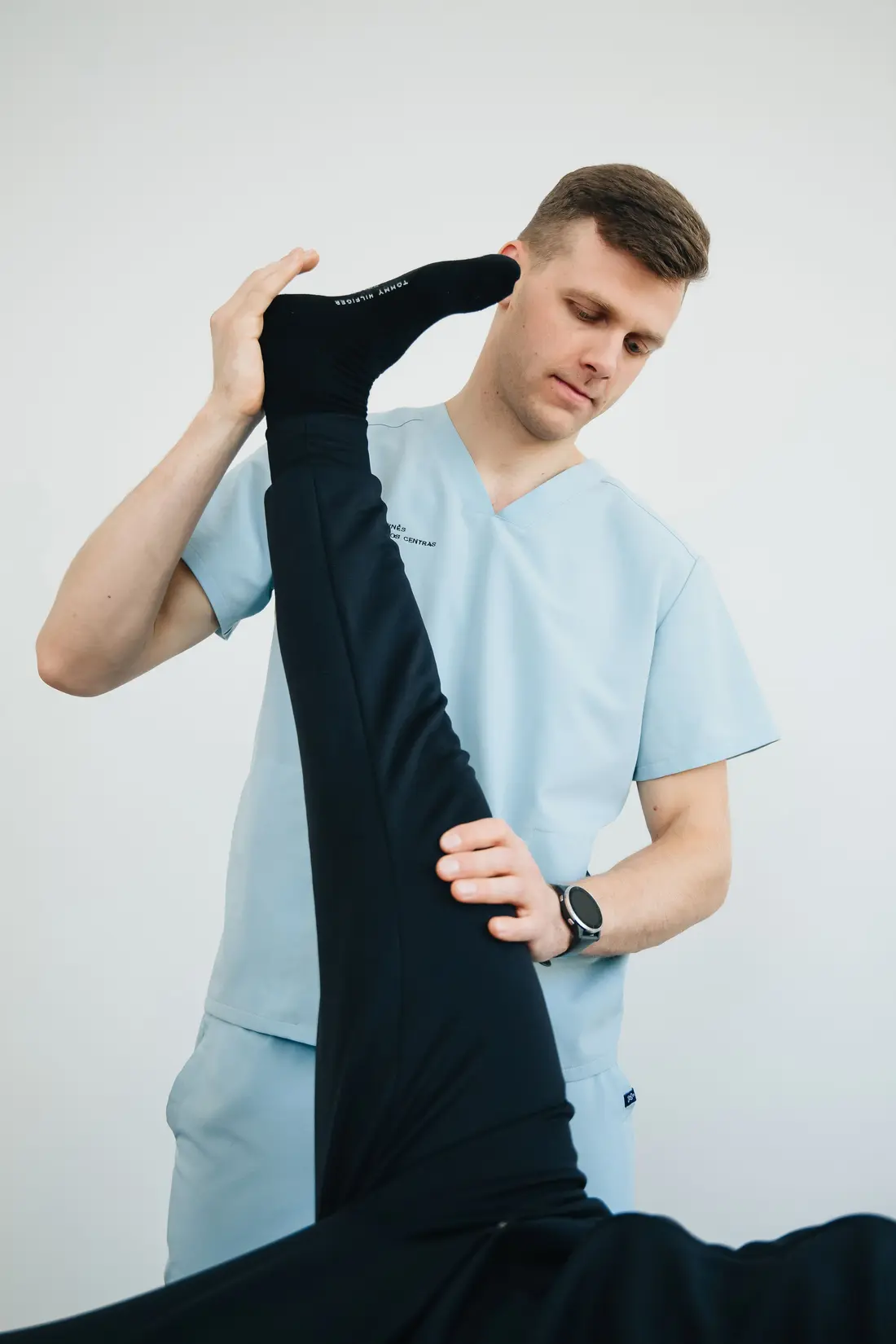
Before treating “arthritis”, confirm what is actually limiting the knee.

The consultation connects symptoms to a physical examination and the life they are interrupting. Arthritis on an X-ray may be relevant—but it should not end the clinical reasoning.

  1. 01

    Is arthritis the main pain source?

    Meniscus, kneecap, tendon, hip or referred pain may create a different pattern.

  2. 02

    Which part of the joint is involved?

    Inside, outside and kneecap compartments can influence the options discussed.

  3. 03

    How does the knee move and bear load?

    Alignment, gait, range, stability, tenderness and swelling add clinical context.

  4. 04

    What has changed in daily function?

    Walking, stairs, sleep, work, exercise and independence carry more meaning than a pain score alone.

  5. 05

    Is there a different or urgent process?

    Inflammatory, infective, traumatic and referred causes must be considered when the story does not fit.

EXAMINATION / 02
Clinician examining a patient's knee and lower limb
“A useful examination asks why this knee hurts—and what that means for the person using it.”

CHAPTER 03 · IMAGING

A scan describes structure.It does not measure your life.

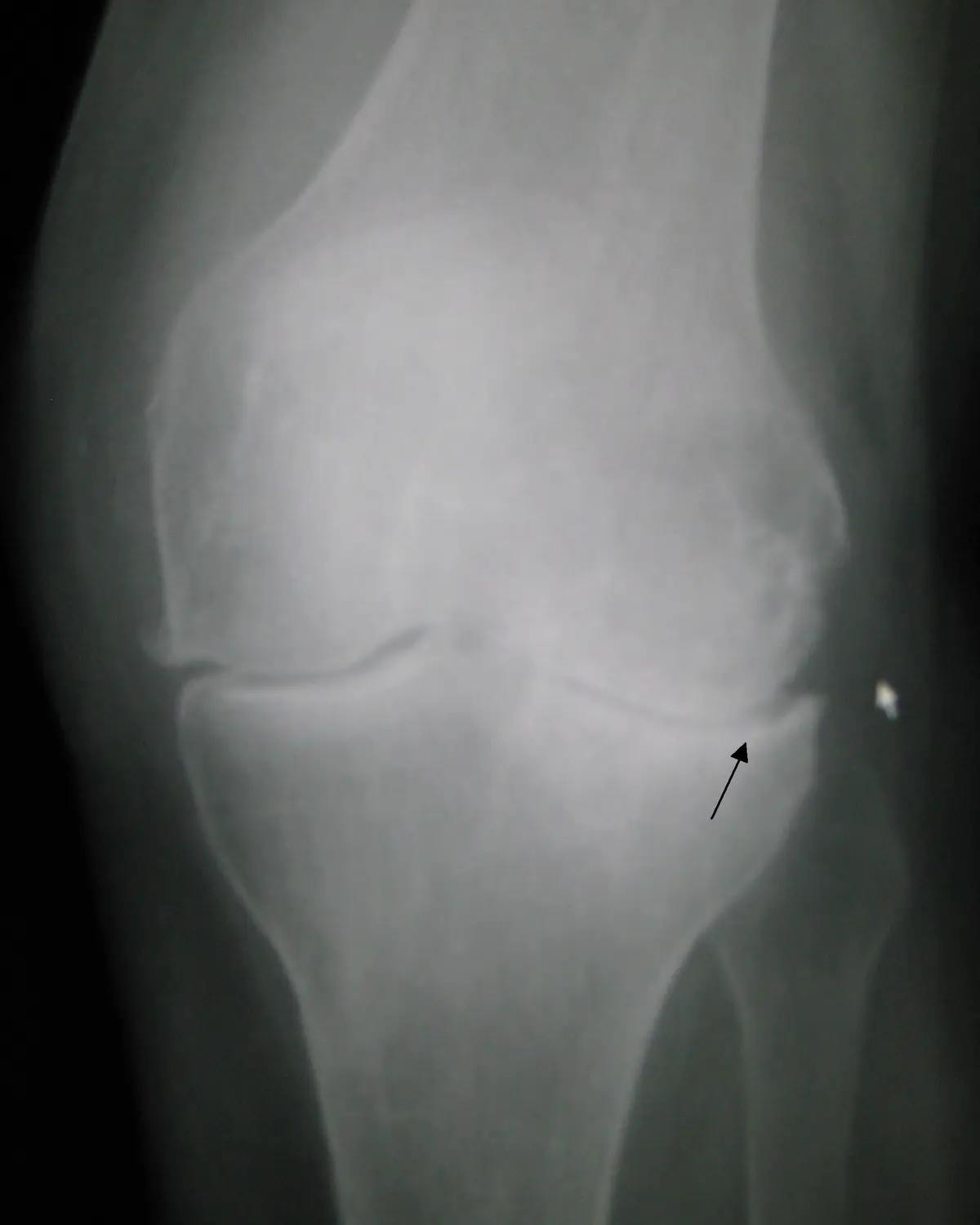
When imaging is needed to clarify the diagnosis or plan treatment, standing or weight-bearing X-rays can help assess joint-space loss, bone change and alignment. MRI may answer selected questions, but is not routinely required for a typical osteoarthritis presentation.

Frontal knee X-ray demonstrating osteoarthritis with tibiofemoral joint-space narrowing, osteophytes and increased subchondral bone density
X-ray: James Heilman, MDCC BY-SA 3.0

SELECTED OBSERVATION 01 / 03

Joint-space narrowing

On this frontal view, asymmetric narrowing is most evident in a tibiofemoral compartment. Joint-space loss is interpreted together with symptoms, examination, alignment and the other radiographic views.

CHAPTER 04 · OPTIONS

Treatment is a decision map.
Not a ladder to surgery.

The right route depends on symptoms, physical function, diagnosis, general health, goals and previous care. Options may be combined, revisited or ruled out after an individual assessment.

ROUTE 01

BUILD CAPACITY

Use movement to improve what the knee can tolerate.

What it may include

Education, appropriate exercise, strength and mobility work, pacing and a plan to build activity around the person’s starting point.

What it cannot promise

Exercise does not reverse established structural change, but it may improve pain, confidence and function. Response and timescale vary.

See how the final decision is made

These routes are not steps on a conveyor belt. A person may stay with non-operative care, combine several approaches or discuss surgery when the complete picture supports it.

CHAPTER 05 · DECISION

When does knee replacement enter the conversation?

Not because an X-ray looks worn. Replacement may become relevant when persistent symptoms and meaningful functional limitation remain despite proportionate non-operative care, and the diagnosis and imaging support that route.

01

The diagnosis fits

The pattern, examination and imaging point to arthritis as the main problem.

02

Life is meaningfully limited

Walking, stairs, sleep, work or independence are affected enough to justify the trade-offs.

03

Other care is proportionate

Relevant non-operative options have been considered, tried or are no longer suitable.

04

The trade-offs are understood

Benefits, limitations, risks, rehabilitation and expectations are discussed before deciding.

Older adult working on knee strength and mobility with a trainer

THE FUNCTION THAT MATTERS

The target is a life measure—not a pain score alone.

For one person, success may mean walking through the working day. For another, it may be using stairs, exercising, travelling or preserving independence. Those goals belong in the decision from the start.

  • Walking & everyday mobility
  • Stairs & household tasks
  • Work & family life
  • Exercise & active living

RELATED CLINICAL ROUTES

This may not be the only route.

Symptoms can overlap. These pages help compare arthritis with other common knee pathways without turning a symptom into a diagnosis.

KNEE ARTHRITIS FAQ

Questions worth answering before treatment is chosen.

General information only. A diagnosis and personal recommendation require an individual clinical assessment.

Request an appointment
01What is knee osteoarthritis?

Knee osteoarthritis is a whole-joint condition involving cartilage and other joint tissues. Symptoms and functional effects vary, so treatment is based on the person rather than an X-ray label alone.

02Do X-rays show how much pain I should have?

No. X-rays show structural changes, but pain and disability do not always match their appearance. The clinical history, examination and day-to-day function remain essential.

03Do I always need an MRI for knee arthritis?

No. Typical knee osteoarthritis can often be diagnosed clinically. X-rays are used when imaging is needed to clarify the diagnosis or plan treatment; MRI is generally reserved for selected questions where additional bone, cartilage or soft-tissue detail may change management.

04Can exercise worsen knee osteoarthritis?

Therapeutic exercise is a core treatment for osteoarthritis and can improve pain and physical function. Some temporary discomfort can occur when activity starts or progresses, so the programme should be tailored and built up according to the individual response.

05Do injections cure knee arthritis?

No. Injections do not reverse established osteoarthritis. A corticosteroid injection may be considered for short-term symptom relief in selected circumstances, with the expected benefit, limitations and individual suitability discussed beforehand.

06When is knee replacement discussed?

Replacement may enter the discussion when symptoms and functional limitation remain substantial despite proportionate non-operative care, and the clinical and imaging findings support that route. The procedure options are introduced in the replacement section below.

07Which symptoms need urgent assessment?

Seek urgent medical care for a hot, markedly swollen knee with fever; severe pain after an injury with an obvious deformity or inability to bear weight; or new calf swelling or pain, chest pain, or sudden breathlessness.


YOUR CLINICAL STORY

Your scan is one part of the story.

Bring the symptoms, the timeline, any previous imaging and the activities arthritis is changing. The consultation connects those pieces before the treatment conversation begins.

Prof. Dr. Sammy Hanna, consultant orthopaedic hip and knee surgeon

YOUR SPECIALIST

Prof. Dr. Sammy Hanna

Prof. Hanna is a UK board-certified consultant orthopaedic hip and knee surgeon at Healthpoint Hospital, Abu Dhabi. His clinical interests include primary and revision joint replacement, partial knee replacement, minimally invasive techniques, robotic-assisted hip and knee replacement, and arthroscopic treatment of sports and soft-tissue knee injuries.

Chat with us