Build the patient-specific plan
A three-dimensional model can be used to plan implant position, intended bone preparation and alignment before the operation.
 PROF. DR. SAMMY HANNAMD · FACS · FRCS (TR&ORTH) · CCT (TR&ORTH)
ROBOTIC KNEE REPLACEMENT · ABU DHABI
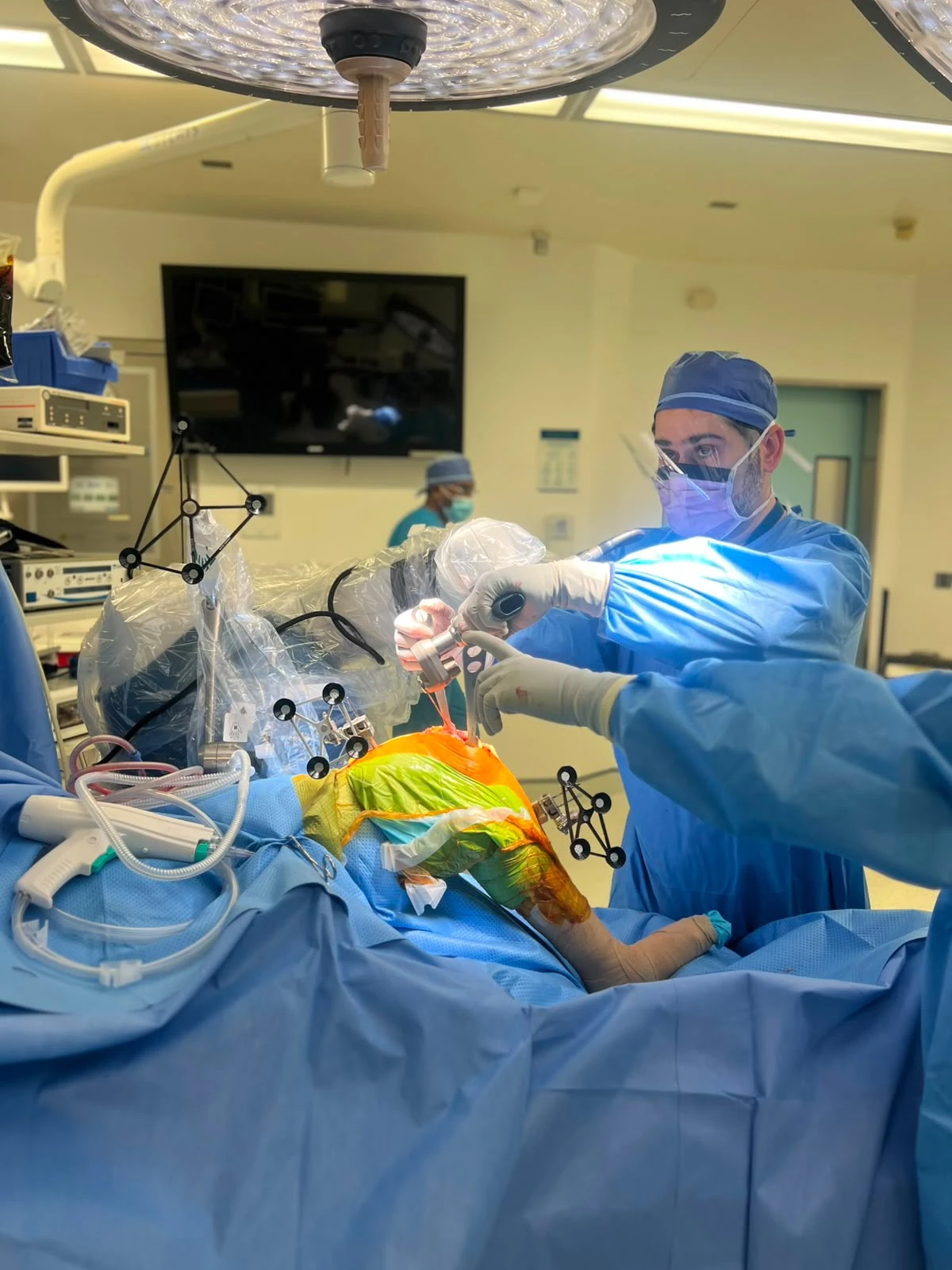
Robotic-assisted knee replacement combines three-dimensional CT-based planning with intra-operative registration, navigation and haptic guidance. The surgeon plans and performs the operation; the robotic system does not operate independently. Robotic knee replacement in Abu Dhabi is available at Healthpoint Hospital with Prof. Dr. Sammy Hanna.
CHAPTER 01 · HOW IT WORKS
Robotic assistance adds a digital planning and guidance layer to knee replacement. It does not replace the clinical decision about whether partial or total replacement is appropriate, and it does not replace the surgeon.
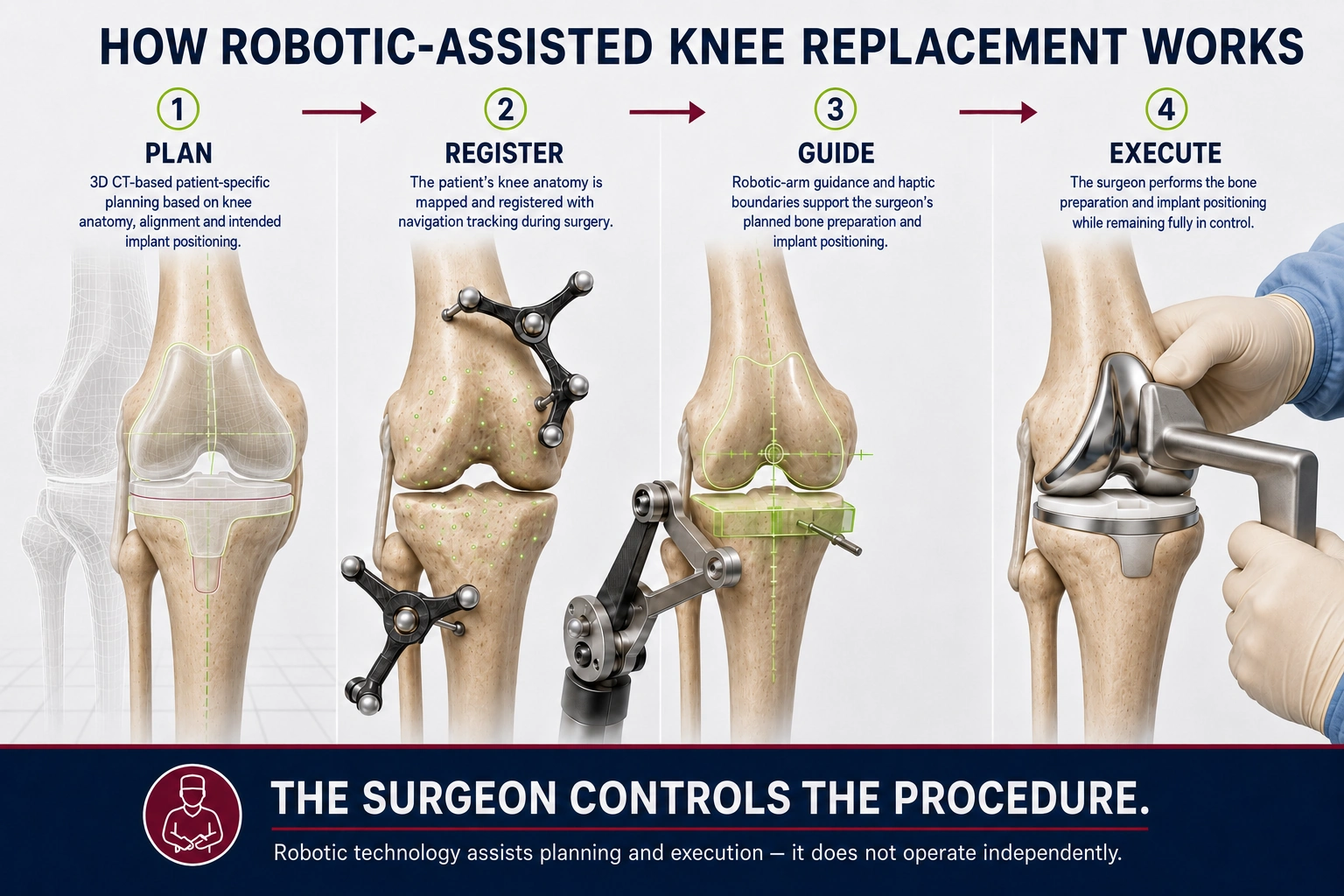
A three-dimensional model can be used to plan implant position, intended bone preparation and alignment before the operation.
Registration, navigation and haptic guidance can help the surgeon perform planned bone preparation while remaining in control throughout the procedure.
CHAPTER 02 · SUITABILITY
Robotic assistance is not a reason to operate by itself. The diagnosis, symptoms, function, replacement type and individual anatomy still come first.
The symptoms, examination, imaging and effect on everyday function should support the decision to consider replacement surgery.
Robotic assistance may support selected partial or total knee replacement procedures; the replacement strategy is determined by the knee problem.
CT-based modelling can help the surgeon understand anatomy and plan component position and bone preparation before surgery.
Range of motion, alignment, stability and ligament balance remain important parts of operative planning and intra-operative assessment.
General health, the operation performed, rehabilitation and individual goals influence recovery more than the presence of a robot alone.
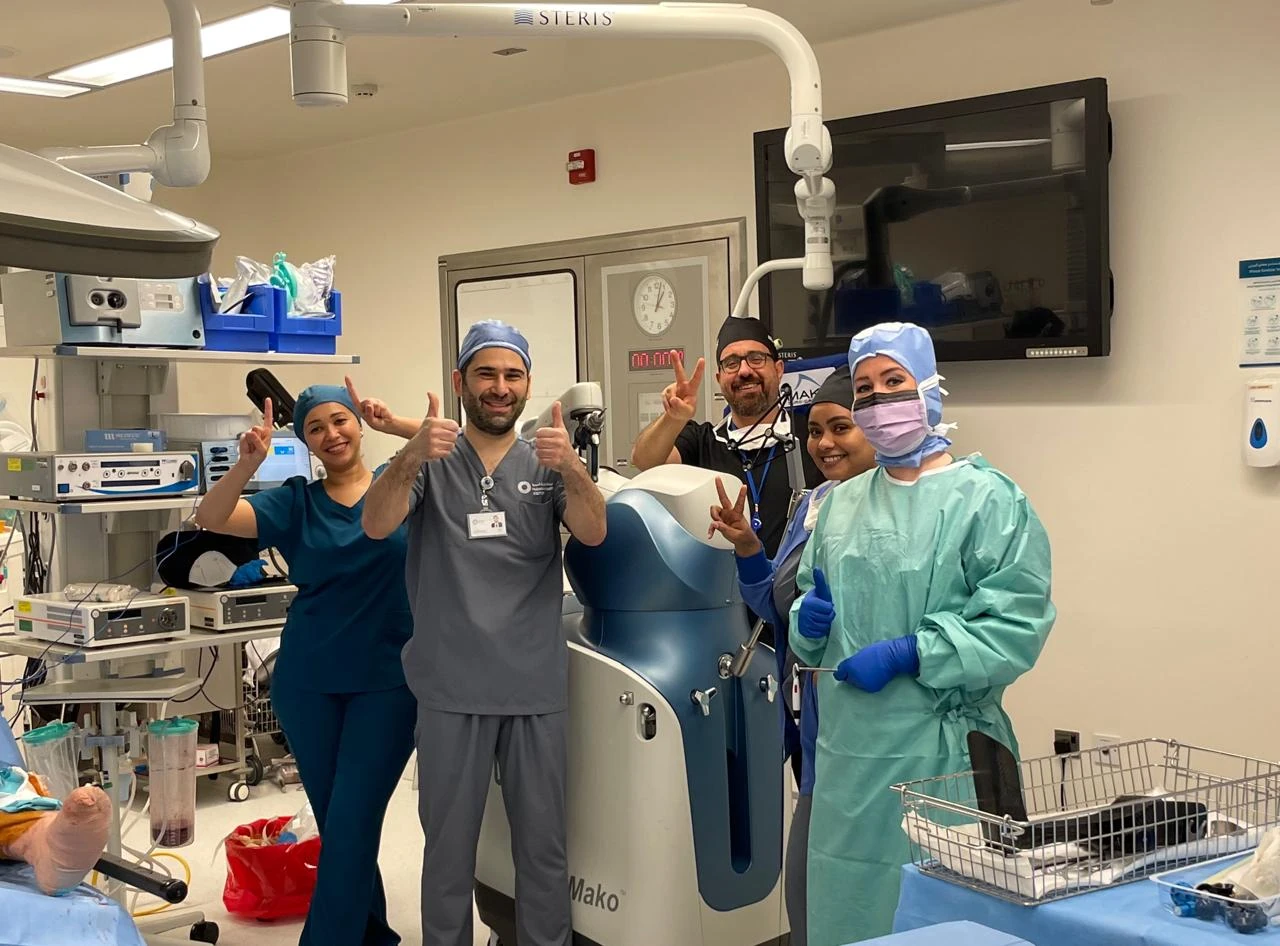
“Robotics is a tool inside a surgical plan—not a reason to operate and not a substitute for surgical judgement.”
CHAPTER 03 · PLAN & REGISTER
Patient-specific planning is connected to the real knee through intra-operative registration and tracking. The system then knows the position of the knee and surgical instrumentation relative to the plan.
The virtual knee model helps the surgeon plan implant position and intended bone preparation before surgery.
Landmarks are registered in theatre so the computer model corresponds with the knee being operated on.
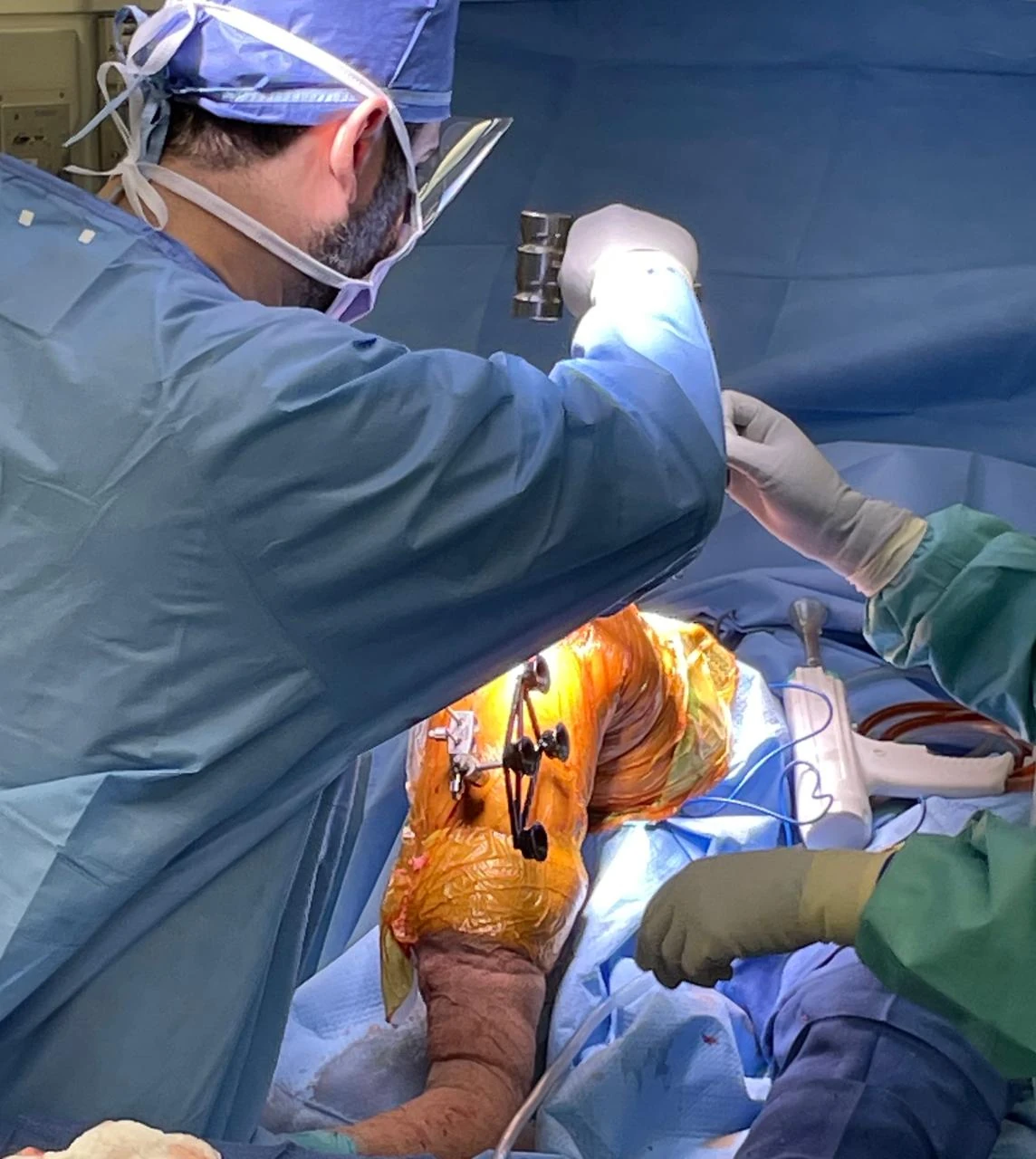
Tracking arrays allow the system to follow the position of the knee and instruments during the operation.
CHAPTER 05 · THE OPERATION
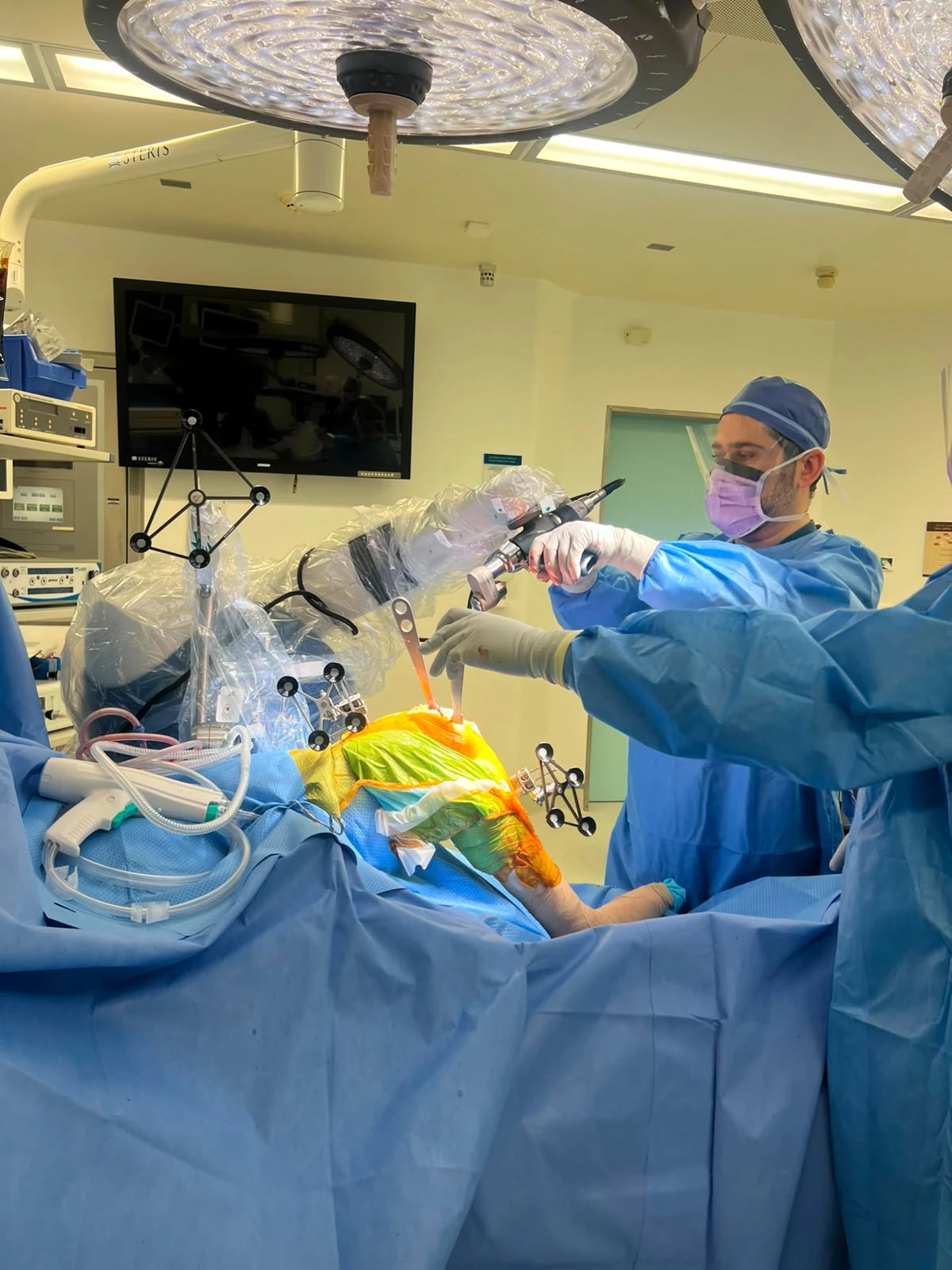
After registration and confirmation of the surgical plan, the surgeon uses the robotic-assisted system during selected steps of the knee replacement. Haptic guidance helps constrain instrument movement to the planned boundaries while the surgeon performs and controls the operation.
The knee anatomy is matched to the virtual model using registered landmarks and tracking arrays.
The surgeon reviews the plan and can assess alignment, movement and soft-tissue information intra-operatively.
Robotic-arm and haptic guidance assist the surgeon while planned bone preparation is performed.
Implant position, stability, movement and balance are assessed before the procedure is completed.
RECOVERY · FUNCTION
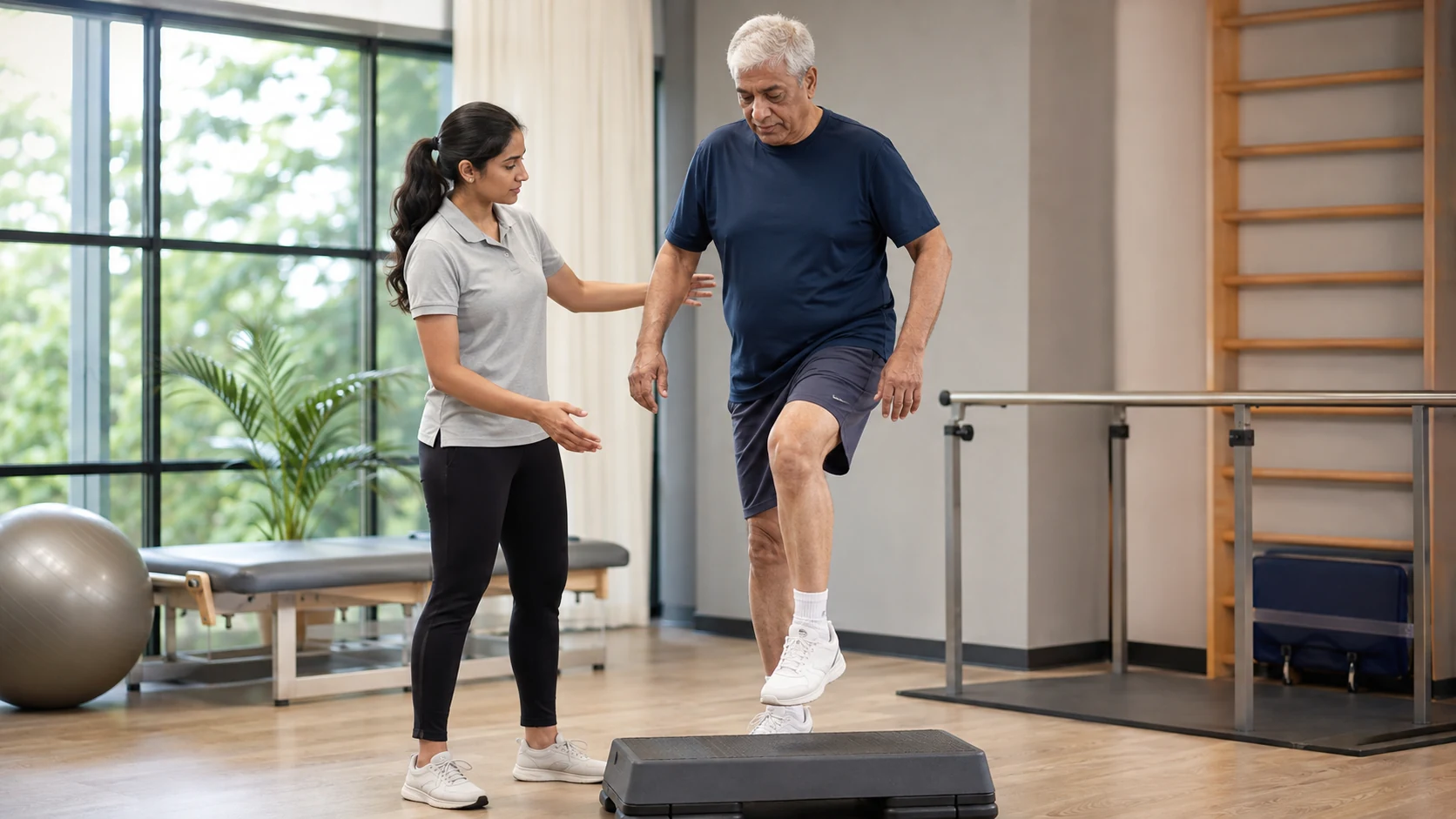
Recovery remains progressive and individual. Early goals include safe mobility, swelling control and useful movement, followed by strength, endurance and return to meaningful everyday activities.
RELATED SURGICAL ROUTES
Use the related pages when the main question is partial versus total replacement, an existing implant problem or the broader surgery pathway.
ROBOTIC KNEE REPLACEMENT FAQ
General information only. The appropriate operation, technology and recovery plan require an individual clinical assessment.
Request an appointmentIt combines patient-specific surgical planning with intra-operative registration, navigation and robotic-assisted instrumentation during selected partial or total knee replacement procedures.
No. The surgeon plans, performs and controls the operation. The robotic system is a tool that assists planning and execution.
Yes, selected robotic platforms can support partial and total knee replacement. The appropriate replacement type depends on the diagnosis and individual knee.
Mako knee replacement uses a CT-based three-dimensional model for surgical planning. Imaging requirements can differ between robotic systems.
No. The decision depends on whether knee replacement is indicated, the type of operation required, individual anatomy, health and the surgeon's assessment.
No. Recovery varies between patients and depends on the operation, general health, rehabilitation and other individual factors.
SURGEON-LED TECHNOLOGY, INDIVIDUALISED
You do not need to choose robotic surgery before the consultation. The first question is which treatment—and if needed, which replacement—best fits the knee. Technology is considered within that plan.

CONSULT THE SPECIALIST
Prof. Hanna is a UK board-certified consultant orthopaedic hip and knee surgeon at Healthpoint Hospital, Abu Dhabi, with clinical interests including primary and revision joint replacement, partial knee replacement and robotic-assisted hip and knee replacement.
 Google ReviewsIndependent patient feedback
 DoctifyVerified patient feedback