Knee arthroscopy is a keyhole procedure.The important question is why it is being done.
Arthroscopy uses a camera and fine instruments passed through small portals to inspect and treat selected problems inside the knee. It can be useful for certain meniscal tears, loose bodies, selected cartilage-related problems, synovial conditions and as part of wider knee treatment—but not every painful knee needs arthroscopy. The indication matters more than the incision size. Knee arthroscopy in Abu Dhabi is performed at Healthpoint Hospital.
When does arthroscopy become the relevant question?
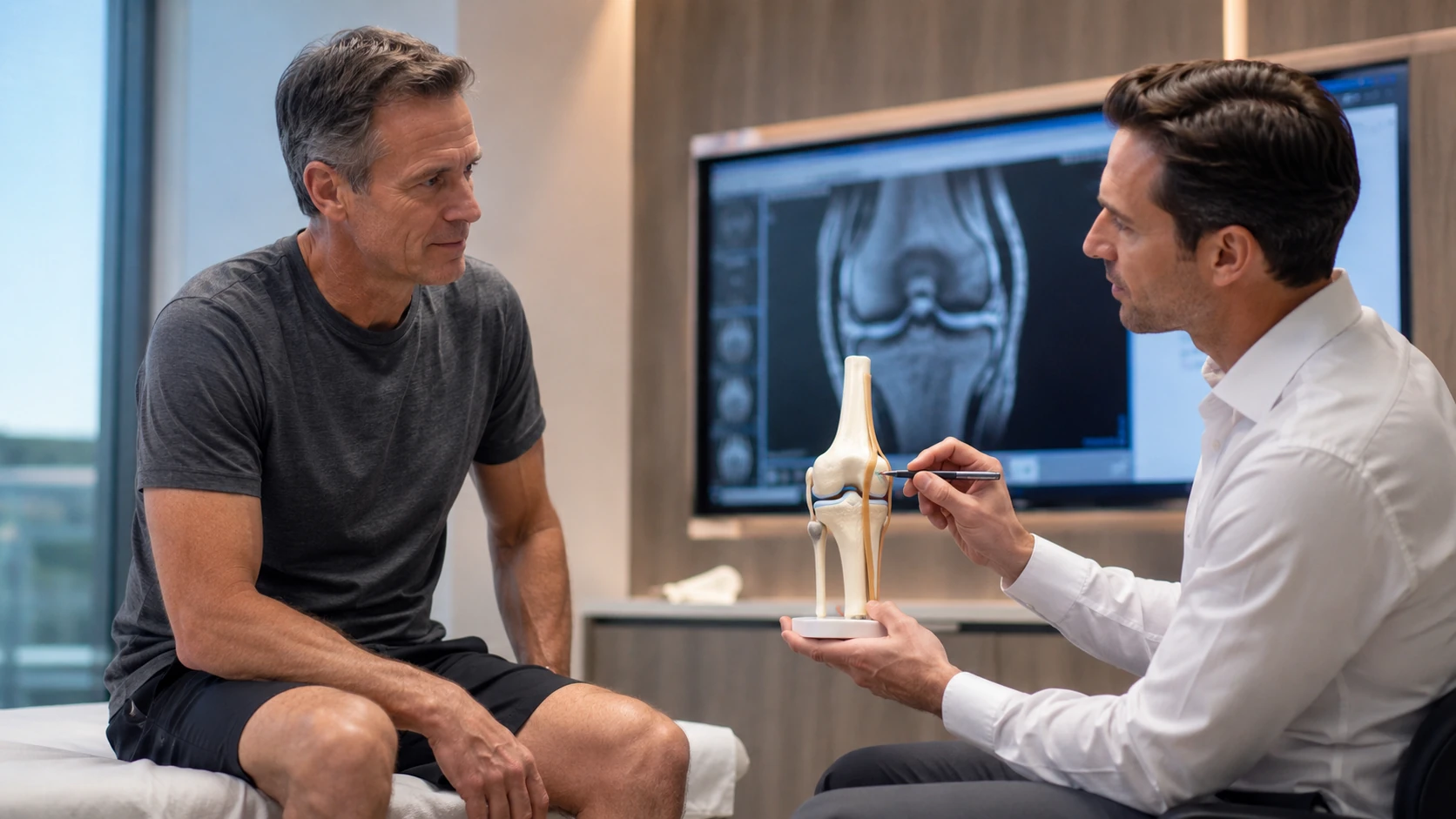
Select the situation closest to the clinical problem being discussed. Arthroscopy is considered only when the pattern, examination and imaging suggest a problem that may benefit from treatment inside the joint.
SELECTION 01AN EDUCATIONAL GUIDE
Mechanical symptoms may point toward an arthroscopic target.
Catching, locking or a fragment-like sensation can suggest a mechanical problem inside the knee, particularly when the symptom pattern matches examination and imaging.
The portals are small. The decision-making around them should be precise.
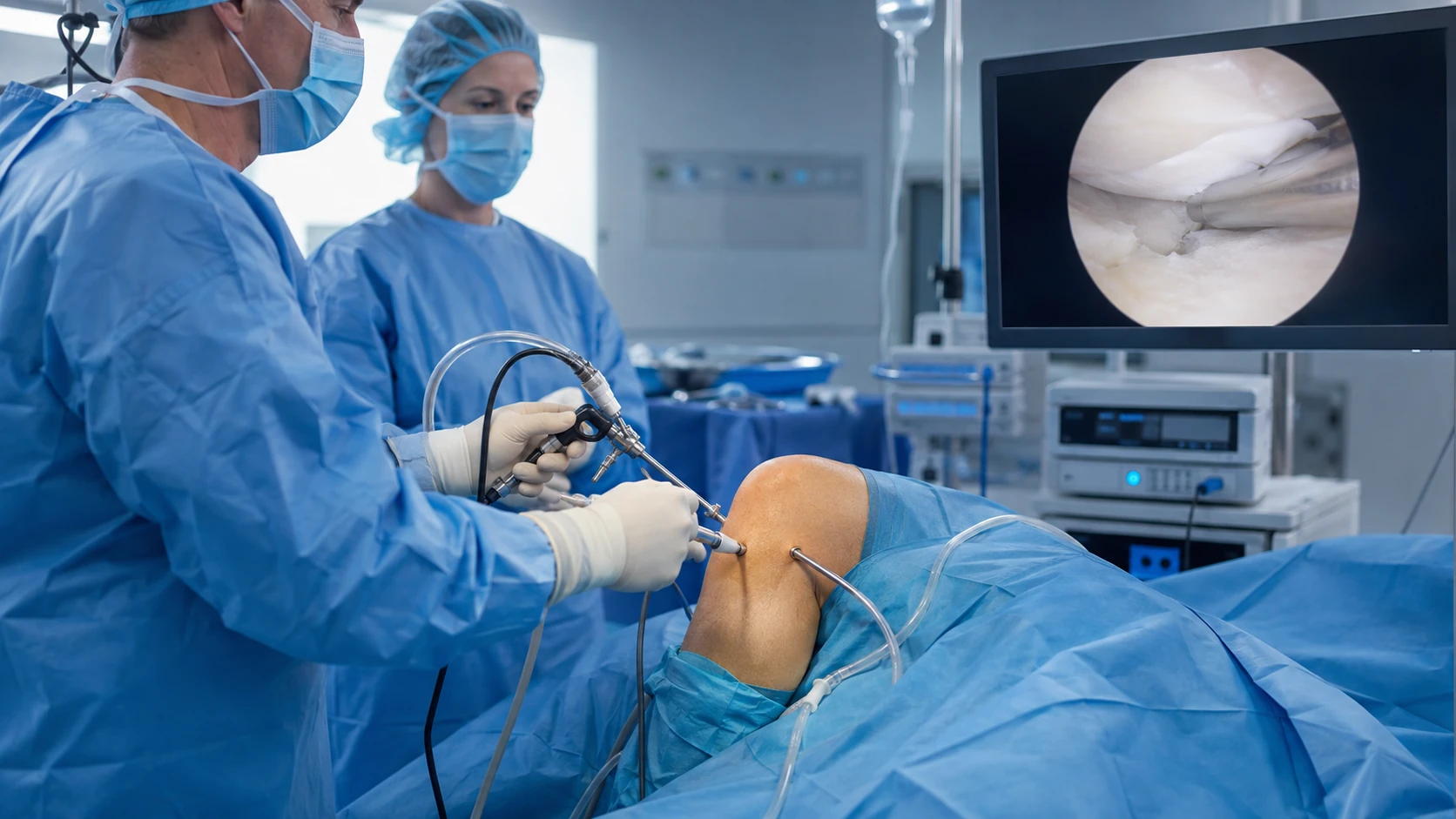
Before arthroscopy, the surgeon clarifies the symptom pattern, examination findings, imaging, likely target and the intended treatment. The procedure is then performed through small portals using an arthroscope and specialist instruments while the knee is viewed on a monitor.
01
What problem are we trying to solve?
The procedure should be linked to a defined intra-articular problem rather than used as a generic response to knee pain.
02
What is the likely arthroscopic target?
The expected issue may be a meniscal tear, loose body, synovial pathology, cartilage-related problem or another structure within the joint.
03
Is it diagnostic, therapeutic or both?
Arthroscopy may confirm a suspected diagnosis, directly treat the identified problem or form part of a broader procedure.
04
What may be done once inside the knee?
The exact treatment—inspection, trimming, repair, debridement or another intervention—depends on the findings and the pre-operative plan.
05
What recovery should the patient expect?
Recovery guidance depends on what is done inside the joint, not simply on the fact that arthroscopy uses keyhole incisions.
PROCEDURE / 02
“Arthroscopy is most valuable when the indication, the target and the expected benefit are all clearly defined.”
CHAPTER 03 · THE PROCEDURE
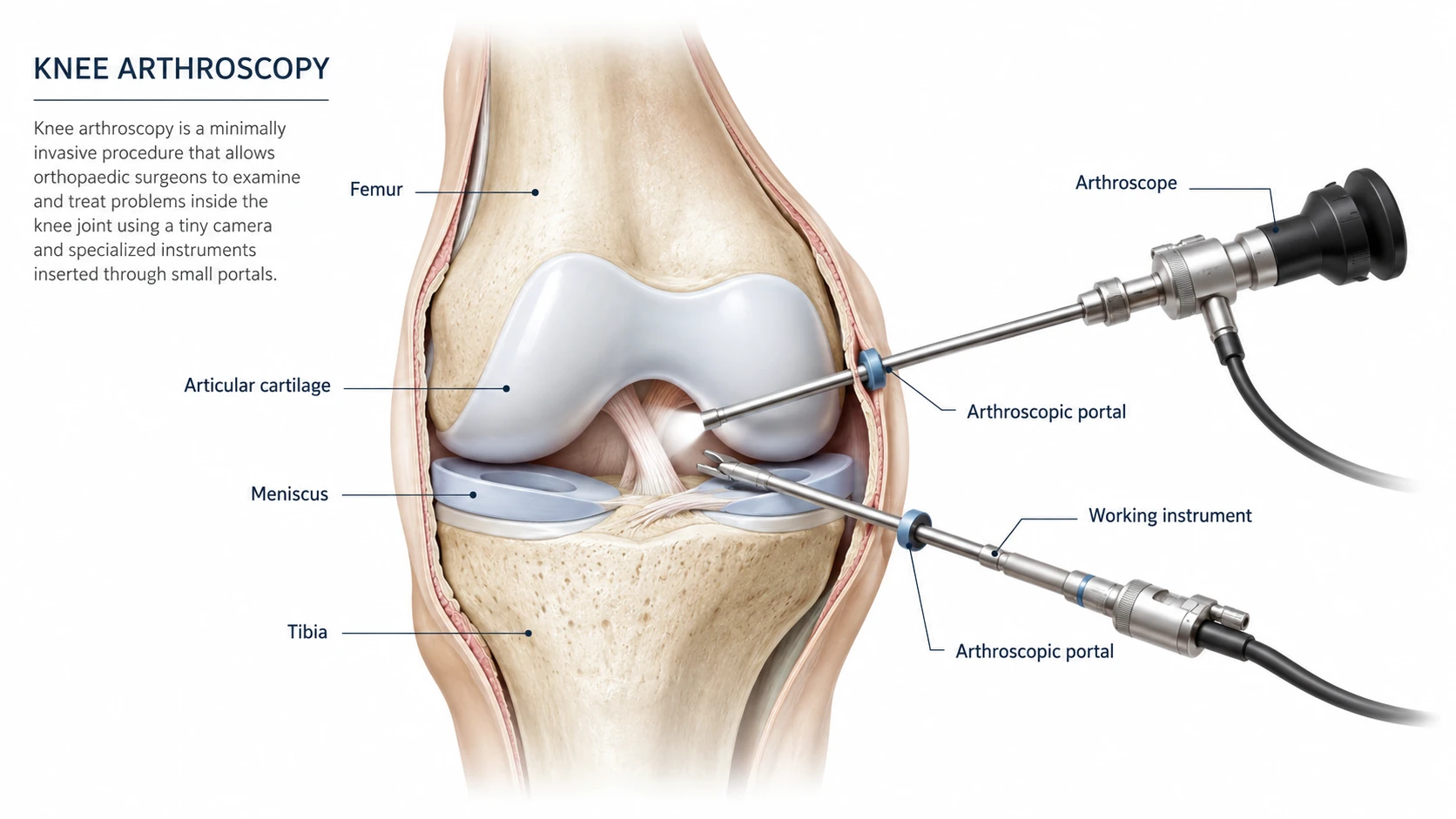
An arthroscope looks inside the knee through a small portal.Working instruments treat the selected problem through another.
Knee arthroscopy uses a camera to visualise structures inside the joint and fine instruments to work on the relevant area. The joint is not treated blindly: the arthroscopic view helps the surgeon inspect the meniscus, cartilage and other intra-articular structures directly.
Simplified educational diagramTechnique varies by patient and problem
SELECTED OBSERVATION 01 / 03
The arthroscope provides the working view inside the joint
The camera passes through a small portal and allows direct inspection of the inside of the knee. That view helps guide diagnosis and treatment rather than relying on indirect judgement alone.
CHAPTER 04 · RECOVERY
Arthroscopy may be minimally invasive. Recovery still progresses in layers.
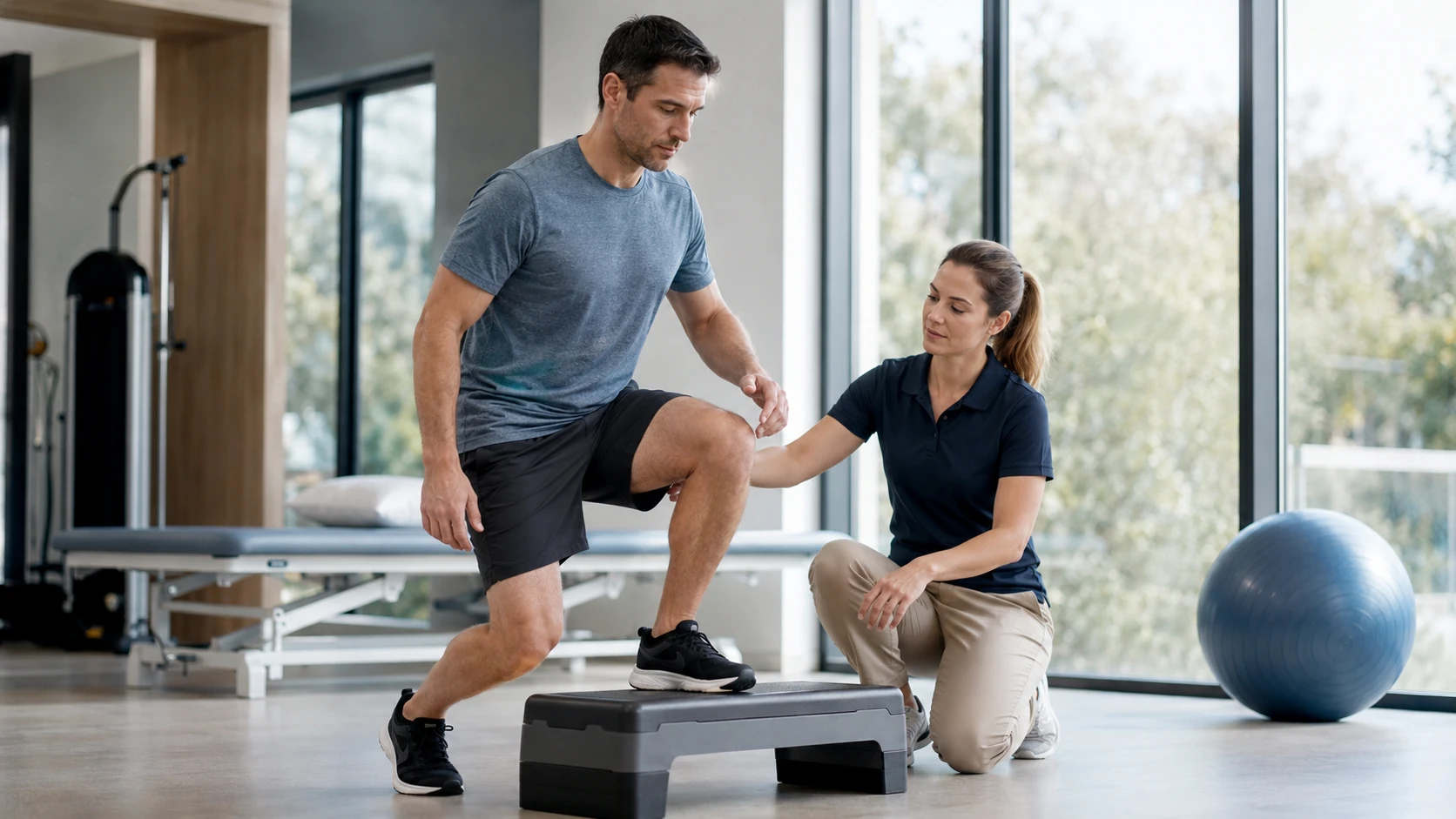
The portals usually recover quickly, but the whole recovery depends on what was done inside the knee. Swelling, motion, load tolerance, strength and activity goals all influence progression.
PHASE 01
SETTLE & RESTORE
Control swelling, restore movement and rebuild a comfortable walking pattern.
What it may include
Swelling control, early motion, progressive walking and straightforward exercise are introduced according to the exact procedure performed.
What it cannot decide
Feeling comfortable after a few days does not automatically prove the knee is ready for higher loads, twisting or sport-specific activity.
↔Recovery is not identical for every arthroscopy. A simple inspection, meniscal trim, repair or cartilage procedure can each change weight-bearing advice, exercise progress and timelines.
CHAPTER 05 · NEXT STEPS
The label “arthroscopy” does not define recovery on its own.
The relevant questions are what was found, what was done and what the knee now needs to tolerate. Some people recover quickly after a limited procedure, while repairs or combined procedures require more protection and structured rehabilitation.
01
The inside treatment matters
A meniscal trim, loose body removal, meniscal repair and cartilage procedure are all arthroscopies, but they do not behave the same afterwards.
02
Swelling and movement still guide progress
Repeated swelling or loss of motion can signal that the knee is being asked to do too much too soon.
03
Strength and load tolerance need rebuilding
Even after a minimally invasive procedure, the knee often needs a structured plan to regain confidence, muscle function and tolerance for activity.
04
The right next route depends on the diagnosis
Arthroscopy often sits alongside meniscal, cartilage or ligament pathways rather than replacing the need to understand the underlying condition.
FOLLOW THE NEXT QUESTION
Knee arthroscopy often belongs to a wider clinical pathway.
These routes help separate the underlying diagnosis from the keyhole procedure used to address it.
The portals heal quickly. Function still has to be rebuilt.
Recovery after arthroscopy aims to reduce swelling, restore motion, rebuild strength and return the knee to the activities that matter. The exact pace depends on what was treated inside the joint and the demands the person wants to return to.
Reduce swelling & restore motion
Rebuild strength & confidence
Progress load tolerance
Return to work, exercise or sport safely
RELATED CLINICAL ROUTES
The diagnosis still matters more than the keyhole instruments.
Use these pages to understand the underlying knee problem that may sit behind arthroscopy.
KNEE ARTHROSCOPY FAQ
Questions worth clarifying before a keyhole knee procedure.
General information only. Whether arthroscopy is appropriate, what will be done and how recovery is guided require an individual clinical assessment.
Knee arthroscopy is a minimally invasive procedure that uses a camera and fine instruments passed through small portals to inspect and treat selected problems inside the knee joint.
02Does every painful knee need arthroscopy?+
No. Arthroscopy is used selectively. The decision depends on the symptoms, examination findings, imaging and whether the likely problem is one that may benefit from arthroscopic treatment.
03What can arthroscopy treat?+
Depending on the case, arthroscopy may be used for selected meniscal tears, loose bodies, some cartilage-related problems, synovial issues and as part of wider procedures such as ligament surgery.
04Is knee arthroscopy a major operation?+
The incisions are small, but the significance of the operation depends on what is done inside the knee. Recovery differs between a simple inspection, a meniscal trim, a repair or a cartilage-related procedure.
05How long does recovery take?+
Recovery varies according to the procedure performed, the condition treated and the individual. Some people progress quickly, while repairs and combined procedures require a longer rehabilitation plan.
06When can I return to work or sport?+
Return to work or sport depends on symptoms, swelling, movement, strength and what was done during arthroscopy. Progress should be individualised rather than based on the calendar alone.
PLAN THE RIGHT PROCEDURE
The most useful consultation clarifies the problem, the purpose of arthroscopy and the expected recovery.
Bring previous imaging, details of mechanical symptoms, episodes of swelling, rehabilitation history and any previous knee surgery. The consultation can then connect the diagnosis, the indication for arthroscopy, the likely intra-articular target and the recovery plan afterwards.
Prof. Hanna is a UK board-certified consultant orthopaedic hip and knee surgeon at Healthpoint Hospital, Abu Dhabi. His clinical interests include sports and soft-tissue knee problems, cruciate ligament injuries, arthroscopic surgery, knee cartilage and meniscus problems, partial knee replacement, primary and revision joint replacement, minimally invasive techniques and robotic-assisted hip and knee replacement.