Feeling better is not the same as being ready.Return to sport is a progression, not a date.
After a knee injury, return to sport is guided by more than healing time. Symptoms, strength, movement quality, confidence, functional testing and the demands of the athlete’s sport are considered together so progression back to training and competition is measured rather than assumed. Return-to-sport rehabilitation guidance in Abu Dhabi is provided alongside surgical care at Healthpoint Hospital.
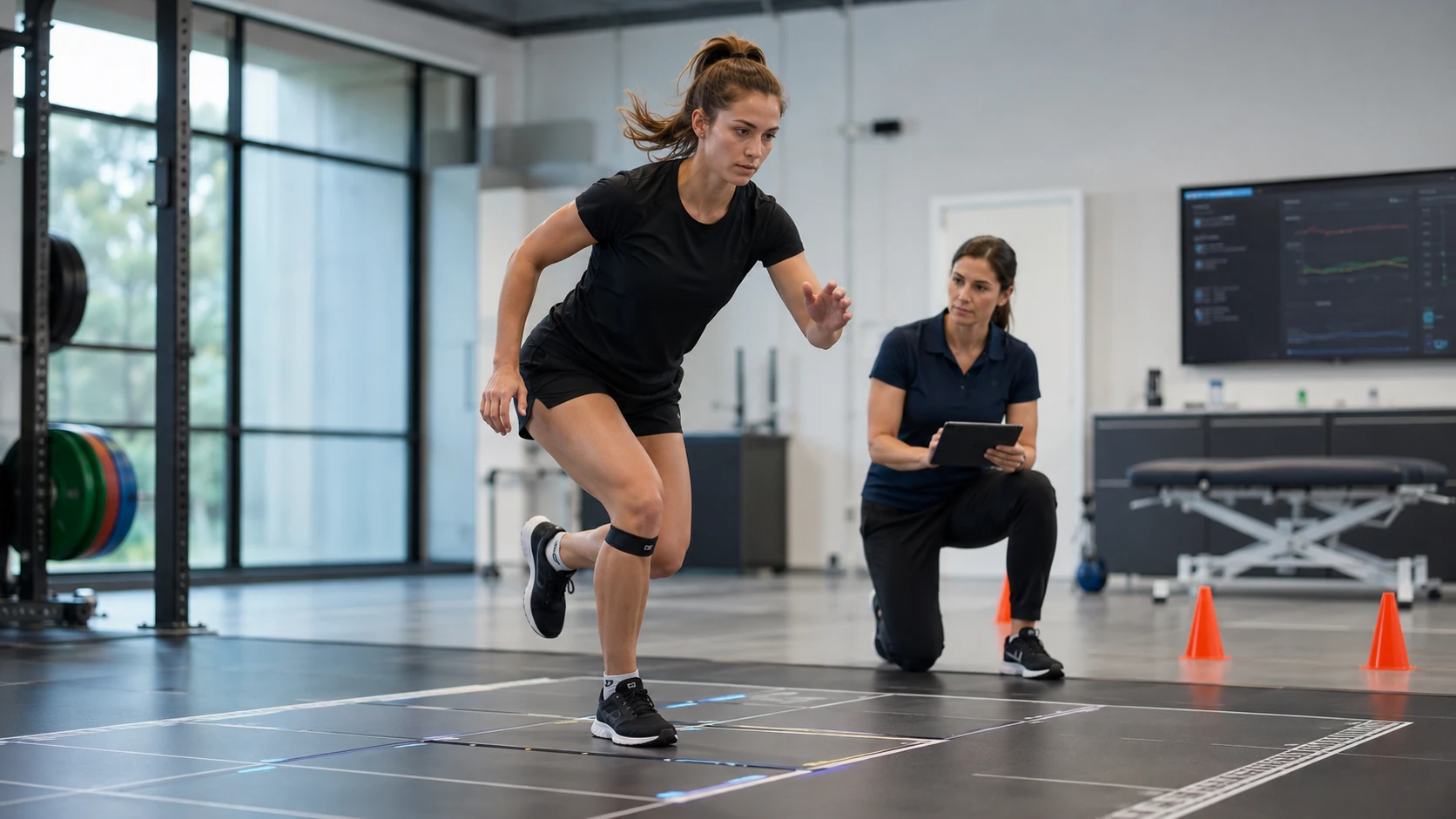
A return-to-sport assessment may combine clinical review with strength and functional tasks that reflect the athlete’s goals. The aim is to understand how the knee performs under increasing demand, not simply whether one test can be completed.
01
Is the knee clinically quiet?
Pain, swelling, motion and stability are reviewed before higher-level loading is interpreted.
02
Has lower-limb strength been rebuilt?
Quadriceps, hamstrings and wider lower-limb capacity are considered alongside the needs of the athlete’s sport.
03
How does the athlete control a single leg?
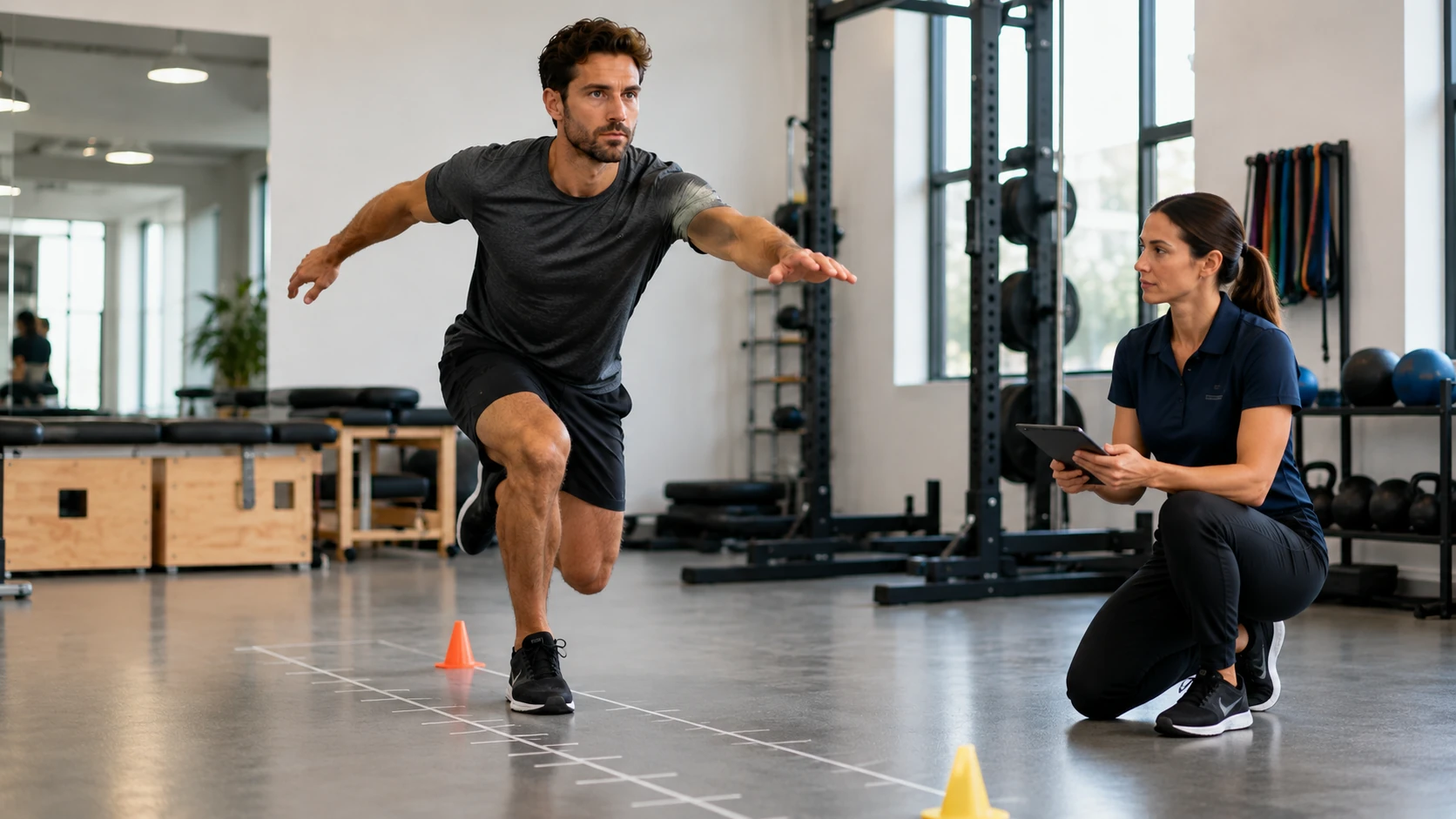
Balance, landing, hopping, stepping and deceleration tasks can reveal movement strategies that are not obvious at rest.
04
What happens when speed and complexity increase?
Change of direction, acceleration, deceleration and sport-specific tasks are progressed when appropriate.
05
Is confidence keeping pace with physical recovery?
Trust in the knee and readiness to perform demanding tasks contribute to the return decision.
FUNCTION / 02
“The useful question is not whether one test is passed. It is whether the athlete can demonstrate readiness across the demands that matter.”
CHAPTER 03 · THE PATHWAY
Return to sport is staged.Progression is individual.
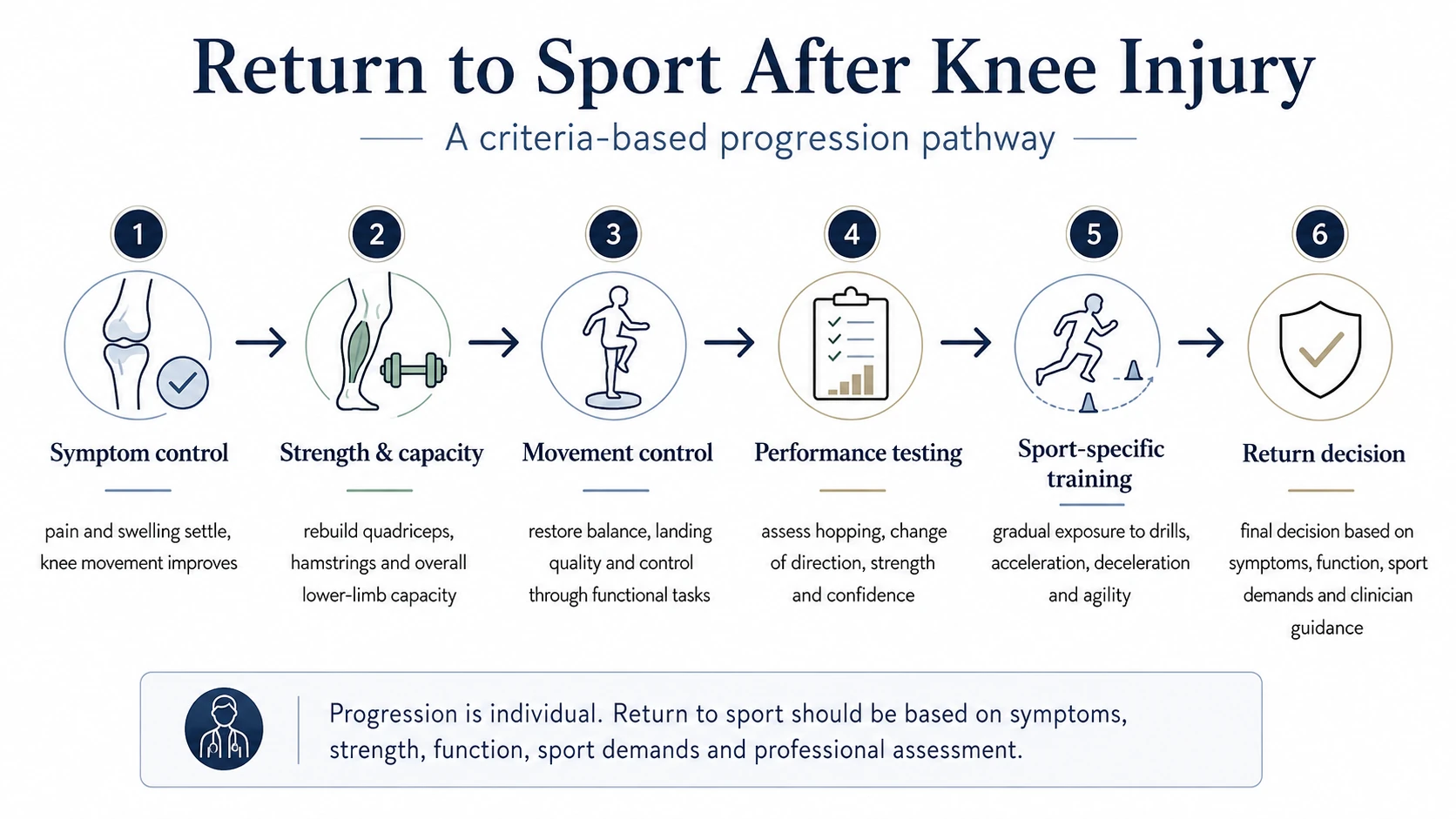
A useful framework moves from symptom control and capacity toward movement quality, performance testing and sport-specific exposure. The order is logical, but the exact criteria and timing vary with the injury, treatment, sport and individual.
Criteria-based educational pathwayNot a universal protocol
SELECTED OBSERVATION 01 / 03
Symptoms, movement and strength form the foundation
Progression starts by establishing that the knee can tolerate current loading while strength and movement quality are rebuilt. Higher-level testing only becomes meaningful on top of those foundations.
CHAPTER 04 · PROGRESSION
Clinic readiness comes first. Sport readiness is built through exposure.
Return usually progresses from controlled rehabilitation to running, change of direction, sport-specific drills, training and eventually competition. The sequence is adjusted to the injury and the sport.
PHASE 01
BUILD CAPACITY
Establish a knee that tolerates current loading and a lower limb that can produce useful force.
What it may include
Symptom control, range of motion, strength work and progressive loading matched to the injury and treatment pathway.
What it cannot decide
Good basic strength does not automatically prove readiness for cutting, contact, high-speed running or competition.
↔Return is progressive, not binary. Athletes may move from rehabilitation to modified training, controlled sport exposure and full participation in stages.
CHAPTER 05 · RETURN
The final decision is a clinical and performance judgement—not one number.
Functional tests can add objective information, but return to sport is usually decided from the complete picture: symptoms, clinical recovery, strength, movement quality, testing, confidence and whether the athlete has tolerated progressive sport-specific exposure.
01
The knee tolerates load
Symptoms remain controlled as running, jumping, direction change and training demands increase.
02
Strength and movement are adequate for the sport
Physical capacity and movement quality are assessed in the context of the athlete’s role and sporting demands.
03
Functional testing supports progression
Hop testing and other performance measures can contribute useful information when interpreted alongside the rest of the assessment.
04
The athlete has rebuilt trust and exposure
Confidence and progressive participation in sport-specific drills and training matter before unrestricted competition.
FOLLOW THE INJURY PATHWAY
Return-to-sport planning depends on what happened to the knee.
These pages explain some of the common sports-knee routes that feed into readiness testing.
The goal is not simply to return. It is to return prepared for the demands ahead.
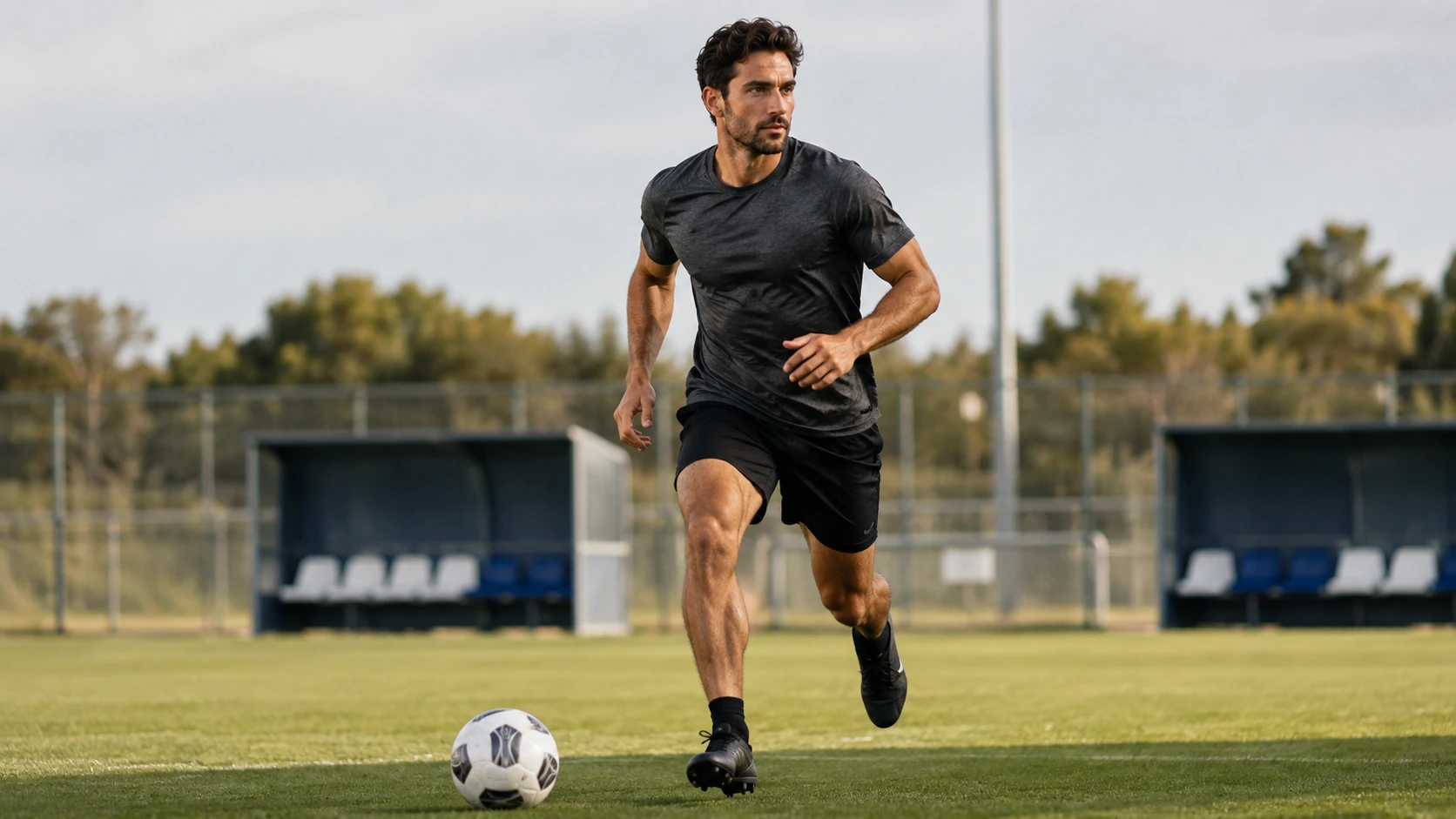
A successful pathway reconnects the recovered knee with real performance: running, accelerating, decelerating, changing direction, training and competing with confidence. The final step is built from the stages before it.
Tolerate sport-specific loading
Move with control under demand
Rebuild confidence & exposure
Return progressively to competition
RELATED SPORTS-KNEE ROUTES
The return plan should match the injury that came before it.
Use these pages to understand the diagnosis, treatment and rehabilitation pathway feeding into return-to-sport decisions.
RETURN TO SPORT FAQ
Questions worth answering before full training or competition.
General information only. Return-to-sport criteria vary with the injury, treatment, sport and individual clinical assessment.
01How is return to sport after a knee injury decided?+
The decision usually combines symptoms, clinical recovery, strength, movement control, functional testing, confidence, sport demands and progression through training exposure rather than time alone.
02Is hop testing enough to clear an athlete?+
No. Hop testing can contribute useful information, but it should be interpreted alongside strength, symptoms, movement quality, clinical findings, confidence and the demands of the sport.
03What if the knee still swells after exercise?+
Repeated swelling can suggest that the knee is not yet tolerating the current level of loading and may need reassessment or adjustment before progression.
04Does everyone follow the same progression?+
No. The injury, whether surgery was performed, associated injuries, rehabilitation progress and the demands of the sport all influence the pathway.
05Does confidence matter?+
Yes. Confidence and readiness to perform demanding sport-specific movements are relevant parts of the return decision and are considered alongside physical recovery.
06Is there one fixed timeline for return to sport?+
No single timeline applies to every knee injury. Time may be one factor, but progression should be based on the clinical picture and functional readiness for the sport.
RETURN WITH A PLAN
If the question is “am I ready?”, bring the sport demands into the assessment.
Bring details of the original injury or surgery, previous imaging, rehabilitation progress, current symptoms, the sport and position you want to return to, and any recent testing. The consultation can then connect the knee’s recovery with the demands you are preparing to face.
Prof. Hanna is a UK board-certified consultant orthopaedic hip and knee surgeon at Healthpoint Hospital, Abu Dhabi. His clinical interests include sports and soft-tissue knee problems, cruciate ligament injuries, arthroscopic surgery, knee cartilage and meniscus problems, partial knee replacement, primary and revision joint replacement, minimally invasive techniques and robotic-assisted hip and knee replacement.