ACL INJURY / ACL TEAR · ABU DHABI

An ACL tear changes what the knee can trust.The decision starts with stability—not the scan alone.

ACL injuries often follow a pivot, sudden stop, awkward landing or contact event. The first assessment connects the mechanism, swelling, range of motion, ligament stability and any associated meniscus or cartilage injury with the activities and sport the person needs to return to. ACL injury assessment in Abu Dhabi is available at Healthpoint Hospital.

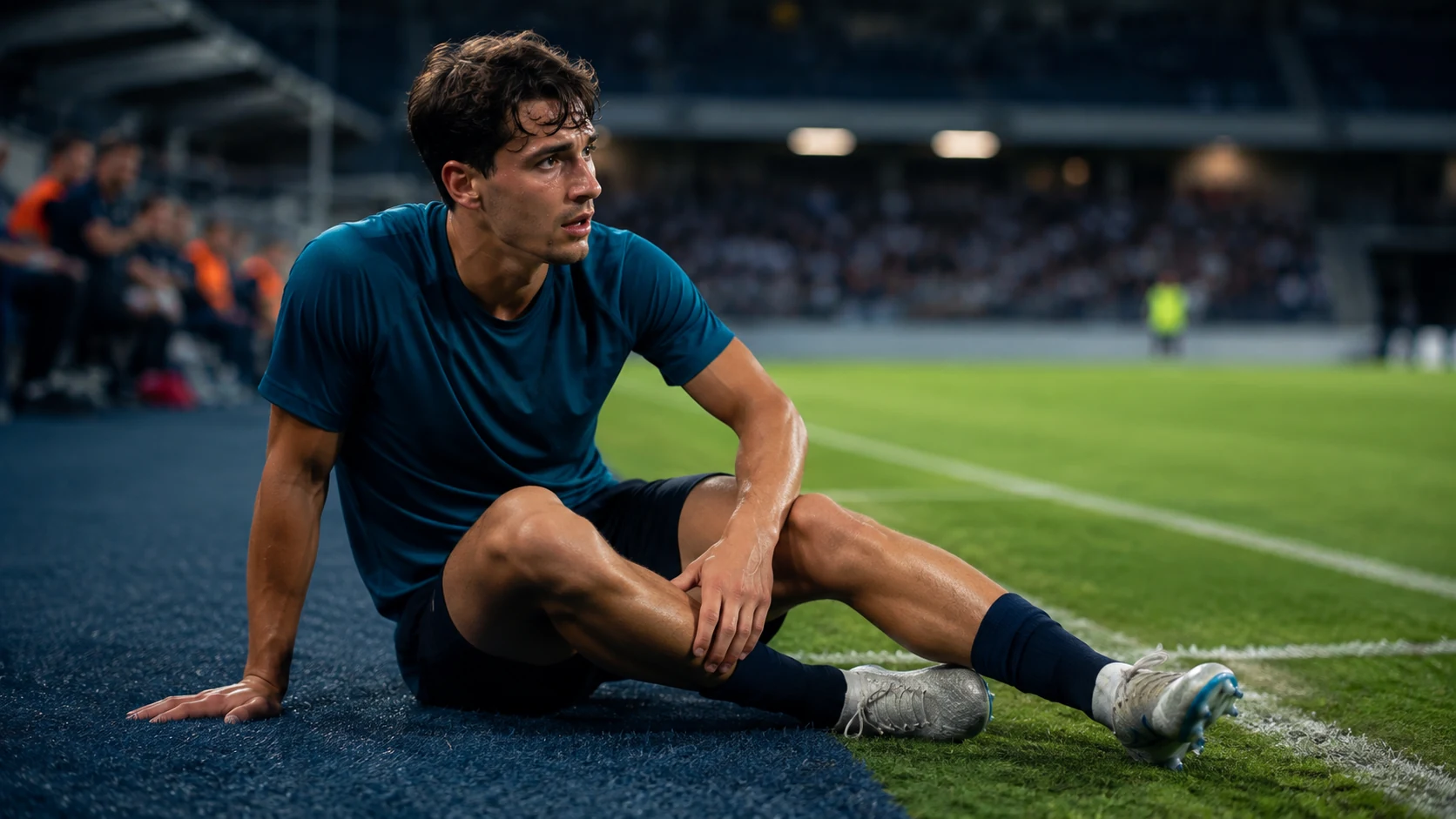
Athlete seated at the sideline after a sports knee injury

CHAPTER 01 · THE PATTERN

What happened—and what did the knee do next?

Choose the description closest to the injury. The pattern helps organise the assessment; it does not prove an ACL tear by itself.

PATTERN 01AN EDUCATIONAL GUIDE

The knee twisted or changed direction with the foot planted.

Rapid cutting or pivoting is a classic ACL injury mechanism. The assessment looks at immediate pain, swelling, instability and whether the meniscus, cartilage or another ligament may also have been injured.

See what the examination checks

CHAPTER 02 · EXAMINATION

Test stability, restore motion and check the whole knee.

ACL diagnosis is built from the injury history and a structured knee examination. Swelling or guarding can affect the early assessment, so findings are interpreted with motion, tenderness, stability and comparison with the other knee.

  1. 01

    Does the mechanism fit an ACL injury?

    Pivoting, sudden deceleration, awkward landing or contact provide useful context, especially when followed by swelling or giving way.

  2. 02

    How stable is the knee?

    ACL-focused tests assess abnormal forward movement and rotational instability, interpreted alongside guarding and the opposite knee.

  3. 03

    Has full motion returned?

    Swelling and loss of extension or flexion matter before progressing rehabilitation and before any surgical plan is finalised.

  4. 04

    Was anything else injured?

    Meniscus, cartilage, MCL, PCL and other structures are assessed because combined injuries can change treatment and rehabilitation.

  5. 05

    What does the athlete need from the knee?

    Walking, work, cutting, pivoting and competitive sport place very different stability demands on the knee.

MECHANISM / 02
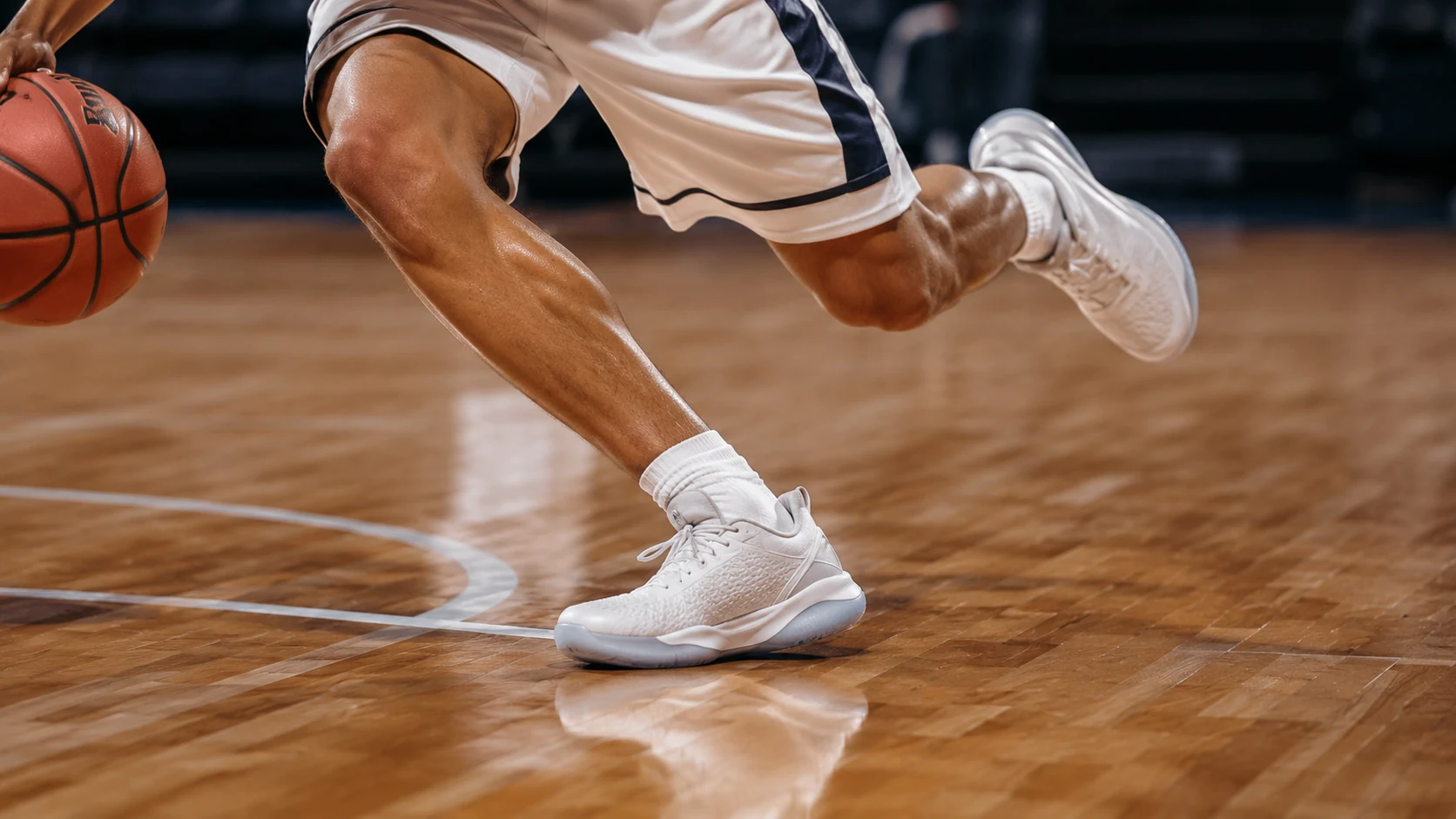
Close-up of a planted foot and flexed knee during a basketball change-of-direction movement
“The mechanism tells you where to look. Stability testing tells you what the knee is doing now.”

CHAPTER 03 · ACL & IMAGING

The tear changes a stabilising structure.MRI adds the rest of the injury map.

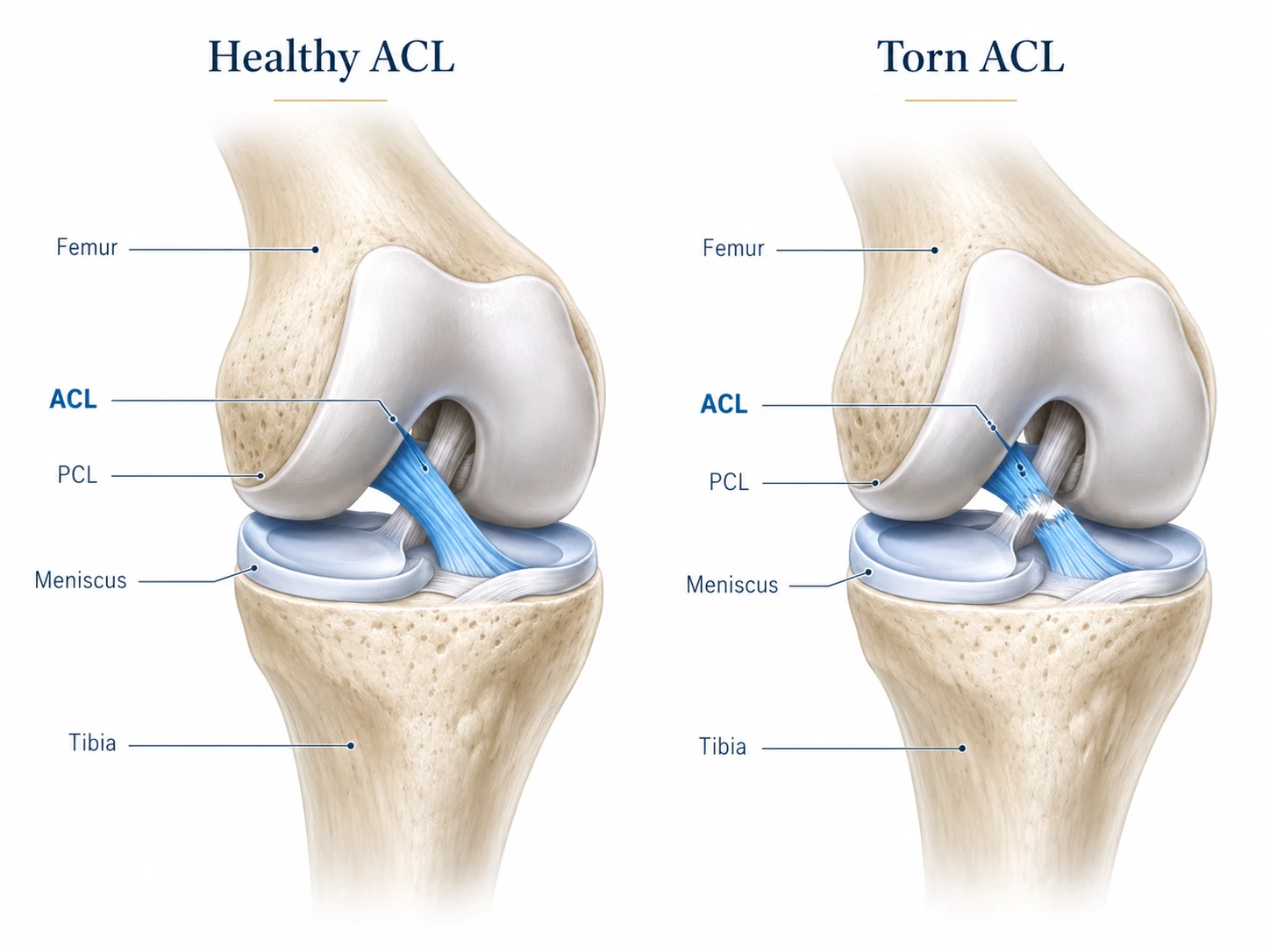
The ACL runs diagonally through the centre of the knee and contributes to forward and rotational stability. MRI is not required to make every ACL diagnosis, but it is useful for defining the ligament injury and associated meniscus, cartilage or other soft-tissue damage when that information will change management.

Patient-friendly diagram comparing a healthy ACL with a torn ACL
Educational anatomyNot patient-specific

SELECTED OBSERVATION 01 / 03

The intact ACL helps control forward and rotational movement

The ACL connects the femur and tibia inside the knee. Its function is interpreted as part of the complete stability system rather than as an isolated structure.

CHAPTER 04 · OPTIONS

Treatment follows stability and demand.
An ACL tear does not create one automatic route.

The plan depends on the degree of instability, injury pattern, associated damage, current motion and swelling, activity level, work or sport demands and the person’s goals.

ROUTE 01

SETTLE & RESTORE

Bring swelling down and regain a confident range of motion.

What it may include

Early symptom control, progressive weight bearing as appropriate, regaining full extension and flexion, and restoring quadriceps activation before higher-level loading.

What it cannot decide

Feeling better in a straight line does not prove that the knee is ready for pivoting sport. Stability, goals and associated injuries still shape the longer-term route.

See how the final decision is made

These are not stages on a conveyor belt. Some isolated tears are managed non-operatively; others lead to reconstruction because instability, sport demands or associated injury change the balance.

CHAPTER 05 · DECISION

When does ACL reconstruction enter the conversation?

Not simply because the MRI says “ACL tear.” Reconstruction becomes more relevant when the knee remains functionally unstable, the person needs reliable pivoting or cutting for sport or work, or associated injuries make surgical stabilisation more appropriate.

01

Instability is meaningful

The knee gives way or cannot be trusted during the movements that matter despite an appropriate rehabilitation plan.

02

The activity demands stability

Pivoting sport, hard cutting, turning or heavy manual work can make recurrent instability unacceptable.

03

The whole injury is considered

Meniscus, cartilage or additional ligament injury may change the timing, procedure and rehabilitation plan.

04

The athlete understands the pathway

Reconstruction is followed by structured rehabilitation and a criteria-based return to sport rather than an immediate return to competition.

Athlete completing controlled single-leg return-to-sport testing in a sports performance laboratory

THE FUNCTION THAT MATTERS

The target is a knee that earns back trust under sport-specific load.

Recovery is not judged by a calendar date alone. Symptoms, swelling, motion, strength, balance, movement control and functional testing help build the picture before running, cutting and competition are progressed.

  • No recurrent swelling
  • Full useful motion
  • Strength & control
  • Sport-specific readiness

RELATED CLINICAL ROUTES

An ACL injury may not be an isolated finding.

The mechanism that tears an ACL can also affect the meniscus, cartilage or other ligaments. These routes help separate the associated problem instead of treating every sports-knee injury as “just the ACL.”

ACL INJURY FAQ

Questions worth answering before the next decision.

General information only. Diagnosis, treatment and return-to-sport recommendations require an individual clinical assessment.

Request an appointment
01What is the ACL and what does it do?

The anterior cruciate ligament is one of the main stabilising ligaments inside the knee. It helps control forward movement of the tibia relative to the femur and contributes to rotational stability.

02What are common symptoms of an ACL tear?

A pop or giving-way sensation may occur at the time of injury, followed by pain, swelling, reduced motion and a feeling that the knee is unstable. Symptoms vary and associated injuries can change the presentation.

03Does every ACL tear need surgery?

No. Treatment is individualised. Rehabilitation may be appropriate for selected stable knees and lower-demand activity, while reconstruction is more often discussed when functional instability persists, pivoting demands are high or associated injuries change the decision.

04Do I always need an MRI?

No. History and physical examination are central to diagnosis. MRI is useful for defining the ACL injury and looking for associated meniscus, cartilage or other ligament injuries when that information will change management.

05Can I walk with an ACL tear?

Some people can walk after an ACL tear once pain and swelling settle, while others feel unstable. The ability to walk does not by itself show whether the ACL is intact or whether the knee is safe for pivoting activity.

06When is ACL reconstruction considered?

Reconstruction may be considered when the knee remains functionally unstable, when sport or work requires pivoting and cutting, or when associated injuries make operative treatment more appropriate. The decision is individual.

07How is return to sport decided?

Return to sport should consider symptoms, swelling, range of motion, strength, balance, movement control and functional performance rather than relying on time alone.

YOUR INJURY STORY

Bring the moment of injury—and the movements the knee no longer trusts.

Bring the mechanism, timing of swelling, episodes of giving way, previous rehabilitation, imaging if available and the sport or activity you want to return to. The consultation connects those pieces before deciding whether the route is rehabilitation, reconstruction or assessment of an associated injury.

Book an ACL consultation
Healthpoint appointments800 77
Prof. Dr. Sammy Hanna, consultant orthopaedic hip and knee surgeon

YOUR SPECIALIST

Prof. Dr. Sammy Hanna

Prof. Hanna is a UK board-certified consultant orthopaedic hip and knee surgeon at Healthpoint Hospital, Abu Dhabi. His clinical interests include sports and soft-tissue knee problems, cruciate ligament injuries, arthroscopic surgery, knee cartilage and meniscus problems, partial knee replacement, primary and revision joint replacement, minimally invasive techniques and robotic-assisted hip and knee replacement.

Chat with us