Exchange what needs attention
When appropriate, revision may involve one component, the bearing surface or a specific instability-related correction rather than replacing every part.
 PROF. DR. SAMMY HANNAMD · FACS · FRCS (TR&ORTH) · CCT (TR&ORTH)
REVISION HIP REPLACEMENT · ABU DHABI
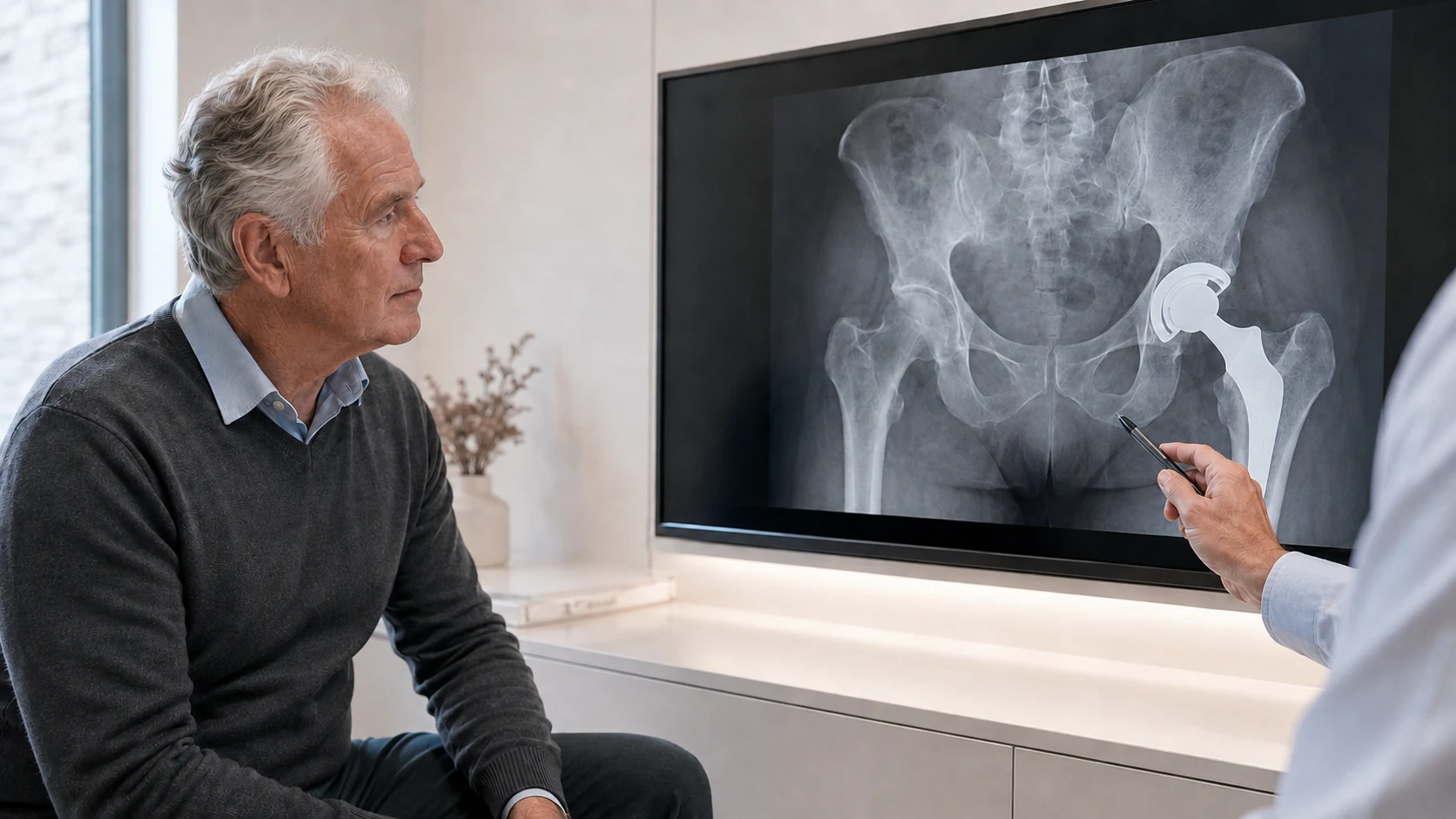
Revision hip replacement is more complex than a first replacement. The assessment defines the cause—such as loosening or wear, infection, recurrent instability or dislocation, fracture or another implant-related problem—before the reconstruction is planned. Revision hip replacement in Abu Dhabi is managed at Healthpoint Hospital.
CHAPTER 01 · THE REVISION PATTERN
Some cases require exchange of one component or a focused correction. Others need broader removal and reconstruction because of loosening, bone loss, instability, infection or fracture.
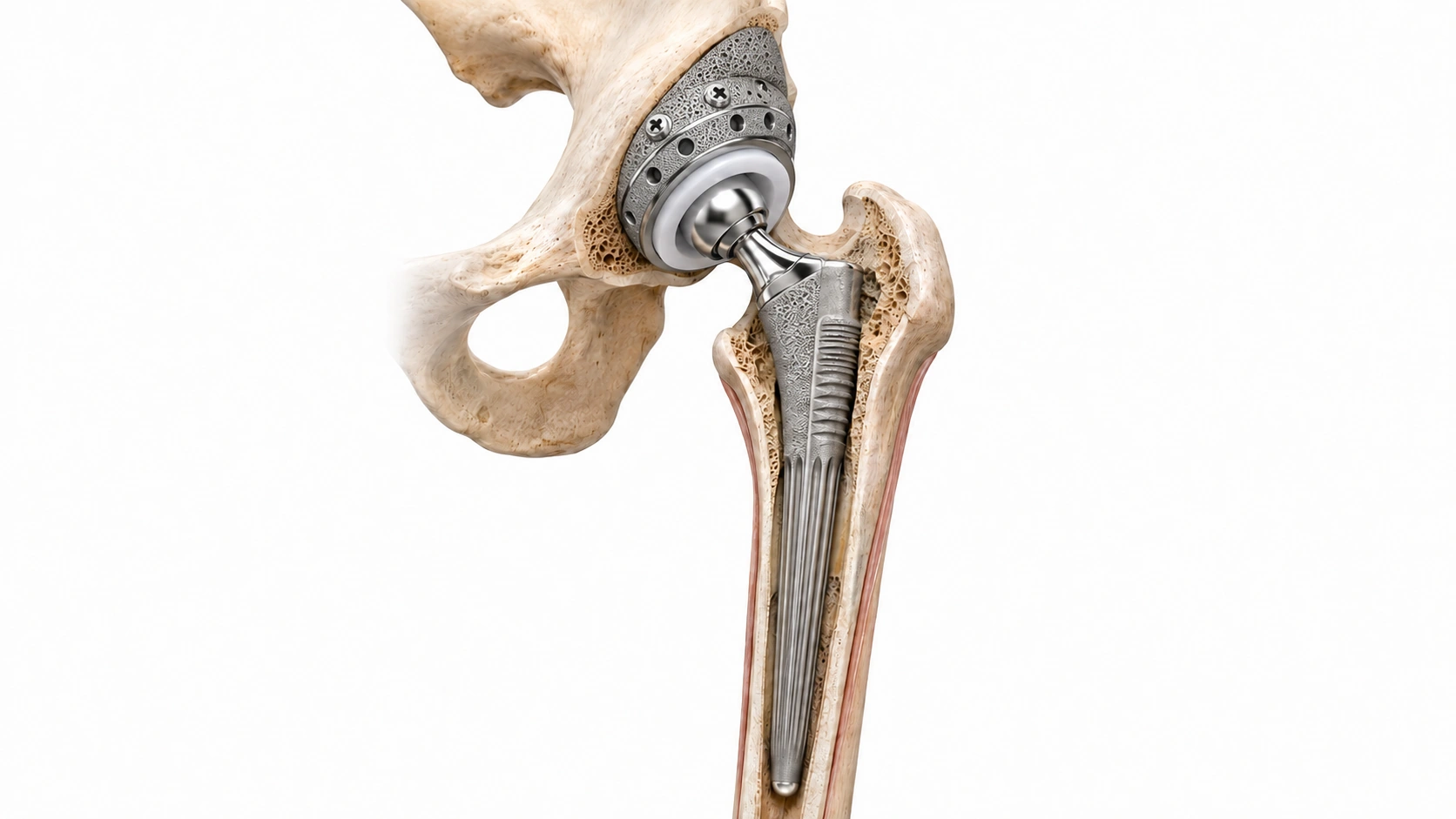
When appropriate, revision may involve one component, the bearing surface or a specific instability-related correction rather than replacing every part.
Loose components, infection, fracture or significant bone loss can require more extensive removal, specialised implants and reconstruction of the acetabulum or femur.
CHAPTER 02 · DIAGNOSIS
Pain after replacement can arise from the implant, bone, infection, instability, tendons, spine or other causes. The assessment has to define the problem before surgery is planned.
Timing, pain pattern, instability episodes, injury, fever, wound history and function help frame the differential diagnosis.
Serial radiographs and selected CT imaging may help assess fixation, wear, position and surrounding bone.
Blood tests and joint aspiration may be required when infection is a concern.
Bone loss, fracture, abductor function and stability can change the reconstruction required.
Mobility, pain, independence, health and expectations shape whether revision is proportionate and what recovery may involve.
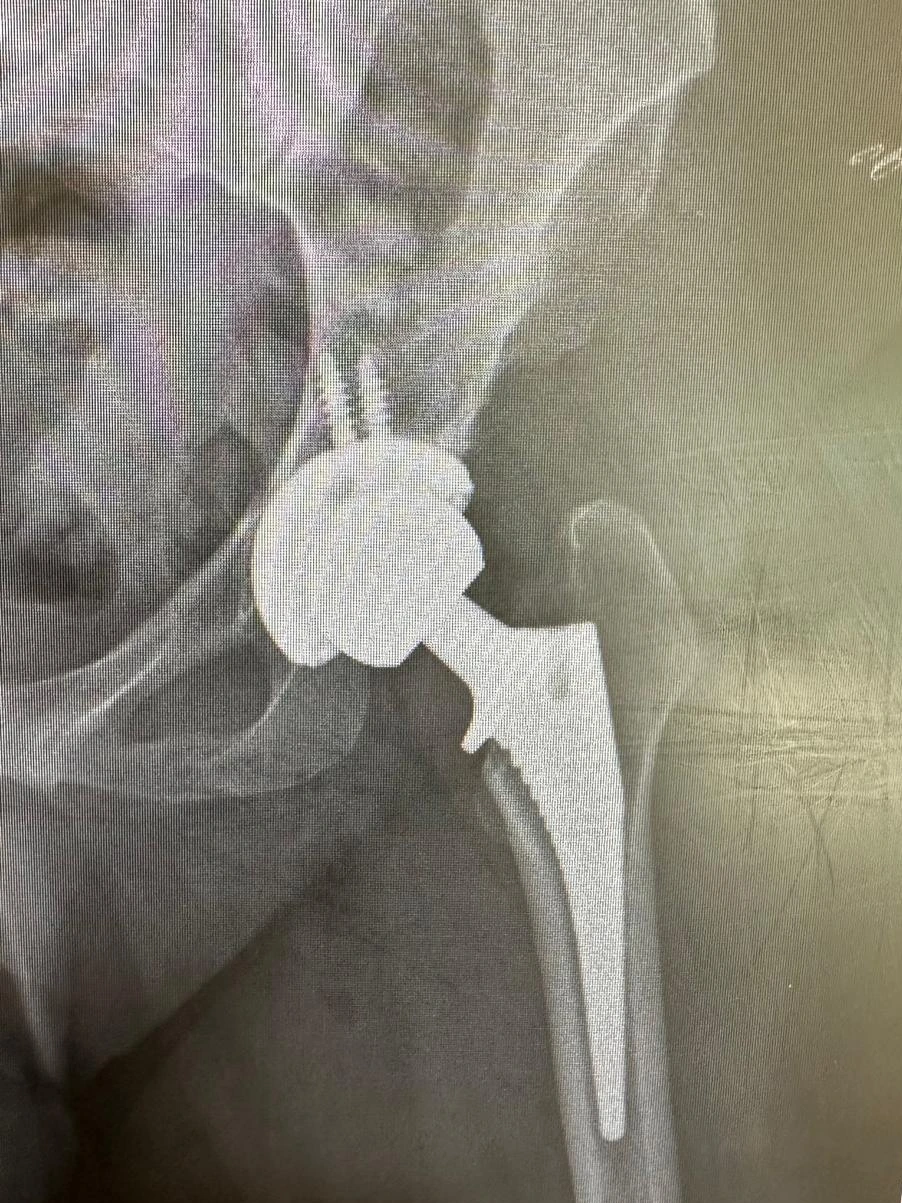
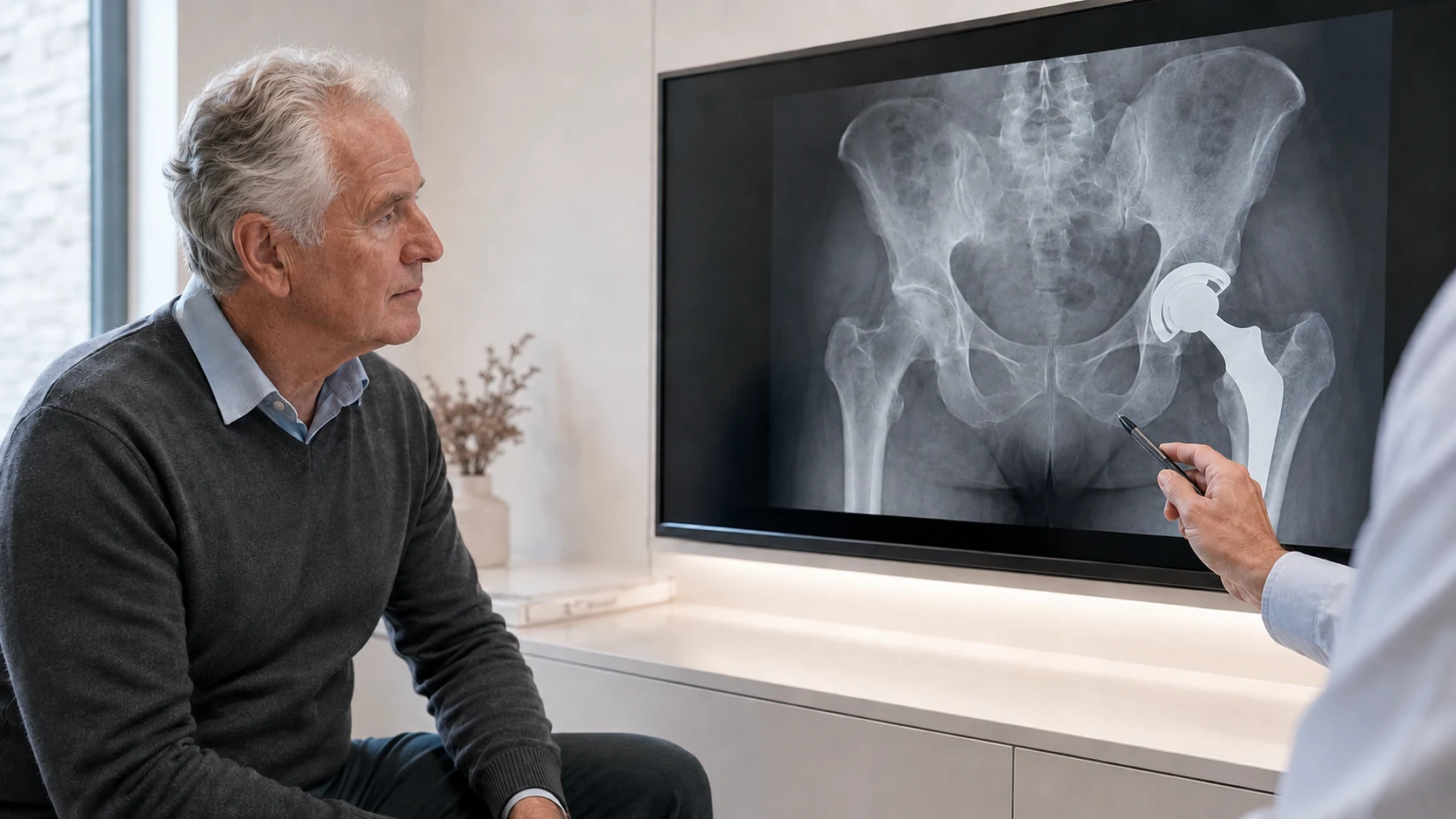
“An X-ray can show the implant and surrounding bone, but the reason for symptoms comes from the whole assessment.”
CHAPTER 03 · IMAGING & FAILURE PATTERN
Revision assessment compares symptoms and examination with radiographs and any previous imaging. CT, blood tests or aspiration are selected when a specific question about components, bone or infection needs clarification.
Radiographs can document component position and surrounding bone. Comparison with earlier films may add useful context.
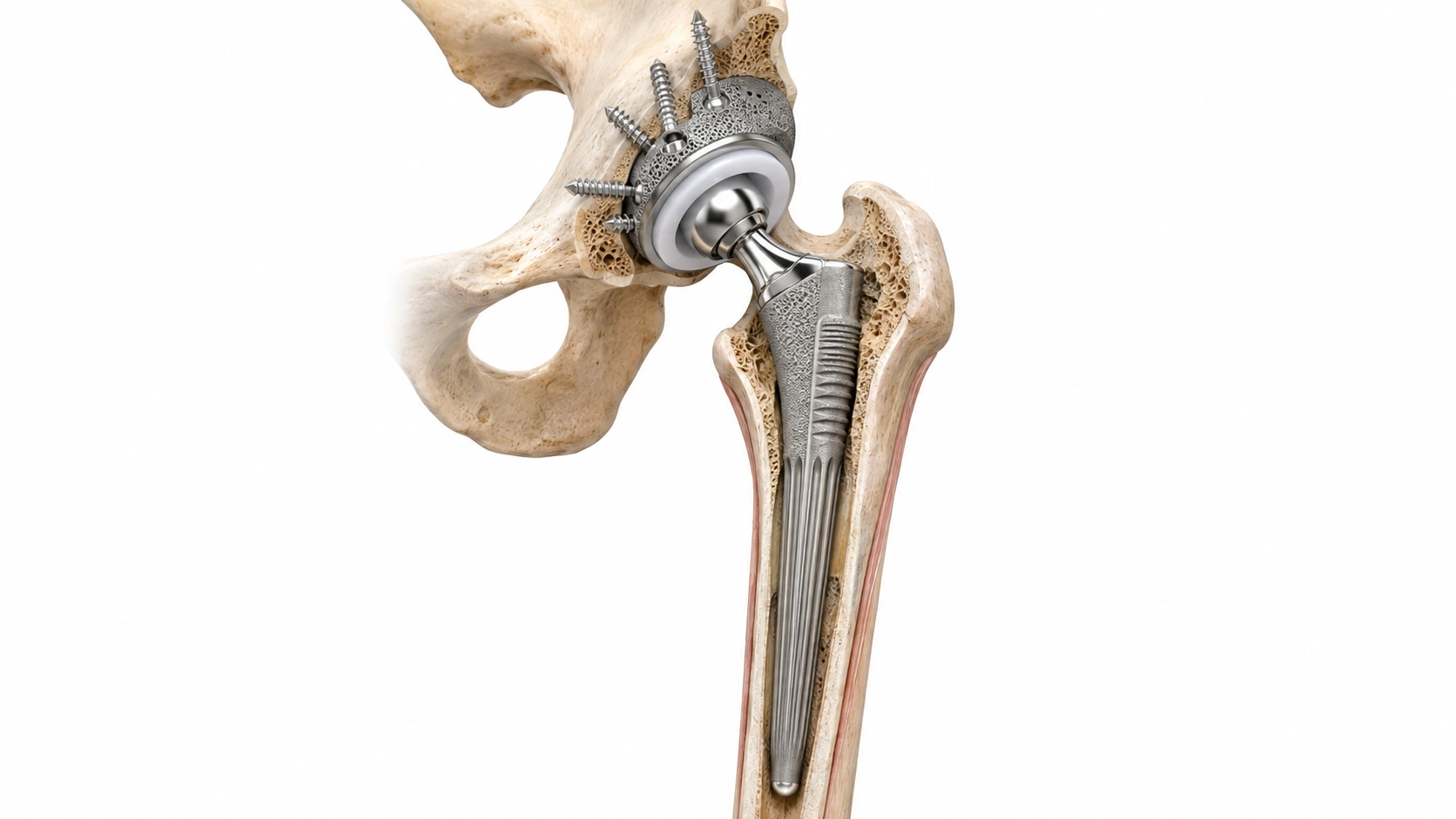
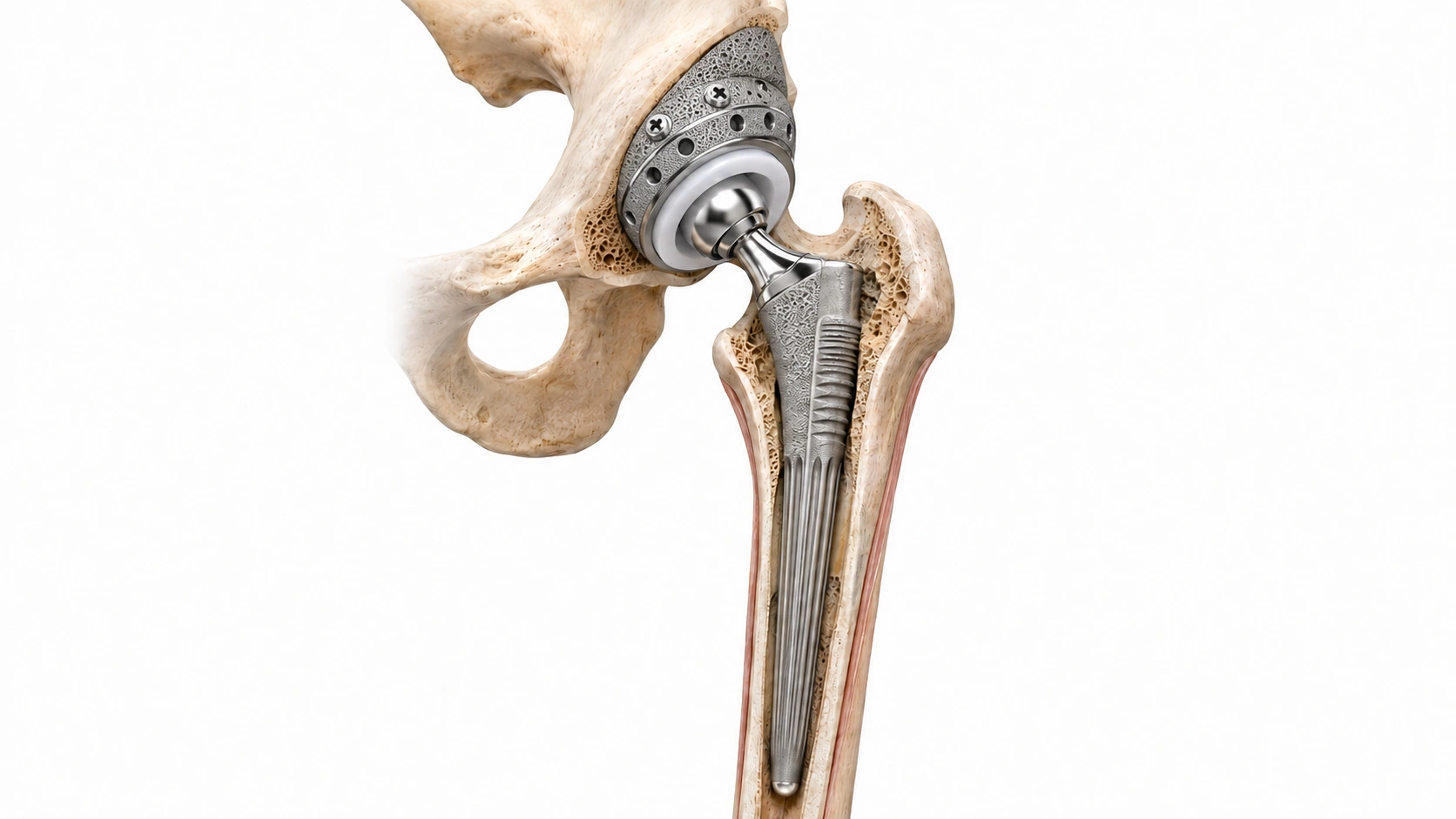
This educational revision construct illustrates how fixation and specialised components may become more complex when bone or implant support needs rebuilding.
Complex revision planning often includes alternative implant and reconstruction options because the final findings may only be fully defined at surgery.
CHAPTER 05 · THE OPERATION
Revision surgery may involve removing one or more existing components, preserving usable bone, reconstructing areas of bone loss and inserting specialised revision components when required. The exact operation depends on the failure pattern and findings at surgery.
Problematic components and cement are removed carefully when they need to be exchanged.
Usable bone and well-functioning components or structures are preserved where the reconstruction allows.
Bone loss or fracture may require specialised cups, stems, augments, graft or other reconstructive options.
The revised hip is assessed for stability, component relationship, leg length and soft-tissue function before completion.

RECOVERY · FUNCTION
Rehabilitation still focuses on safe mobility, strength and everyday function, but the pace depends on why revision was needed, how extensive the reconstruction was, bone and soft-tissue quality and the patient’s starting point.
RELATED HIP ROUTES
Use the related pages when the question is about a first replacement, arthritis, impingement or the overall Hip overview.
REVISION HIP REPLACEMENT FAQ
General information only. A painful or problematic hip replacement needs an individual diagnosis before revision surgery can be recommended.
Request an appointmentRevision may be considered when an existing hip replacement develops a significant problem such as loosening or wear, infection, recurrent instability or dislocation, fracture around the implant, or another implant-related failure.
No. Depending on the cause and condition of the existing components, revision may involve exchanging one part, several parts or the whole hip replacement.
Assessment commonly includes examination and X-rays. CT or other imaging, blood tests and joint aspiration may also be used when specific questions such as infection, component position or bone loss need clarification.
Revision may require removal of existing components, management of bone loss, reconstruction of the acetabulum or femur and specialised revision implants. The operation depends on the failure pattern.
Recovery is individual and can be slower or more complex than after primary replacement, depending on the reason for revision, reconstruction, bone and soft tissues and general health.
Yes. Some prosthetic joint infections are treated in stages, while other strategies may be appropriate in selected cases. The plan depends on the infection, implants, bone and individual circumstances.
A COMPLEX DECISION, INDIVIDUALISED
If possible, bring previous X-rays, operative records, implant details and information about when symptoms changed. These can help build a clearer picture of the existing replacement and the options ahead.

CONSULT THE SPECIALIST
Prof. Hanna is a UK board-certified consultant orthopaedic hip and knee surgeon at Healthpoint Hospital, Abu Dhabi. His clinical interests include primary and revision hip and knee replacement, robotic-assisted joint replacement and arthroscopic treatment of selected sports and soft-tissue conditions.
 Google ReviewsIndependent patient feedback
 DoctifyVerified patient feedback