Socket preparation & cup placement
The damaged socket surface is prepared and an acetabular component with a bearing liner is positioned according to the surgical plan.
 PROF. DR. SAMMY HANNAMD · FACS · FRCS (TR&ORTH) · CCT (TR&ORTH)
PRIMARY HIP REPLACEMENT · ABU DHABI
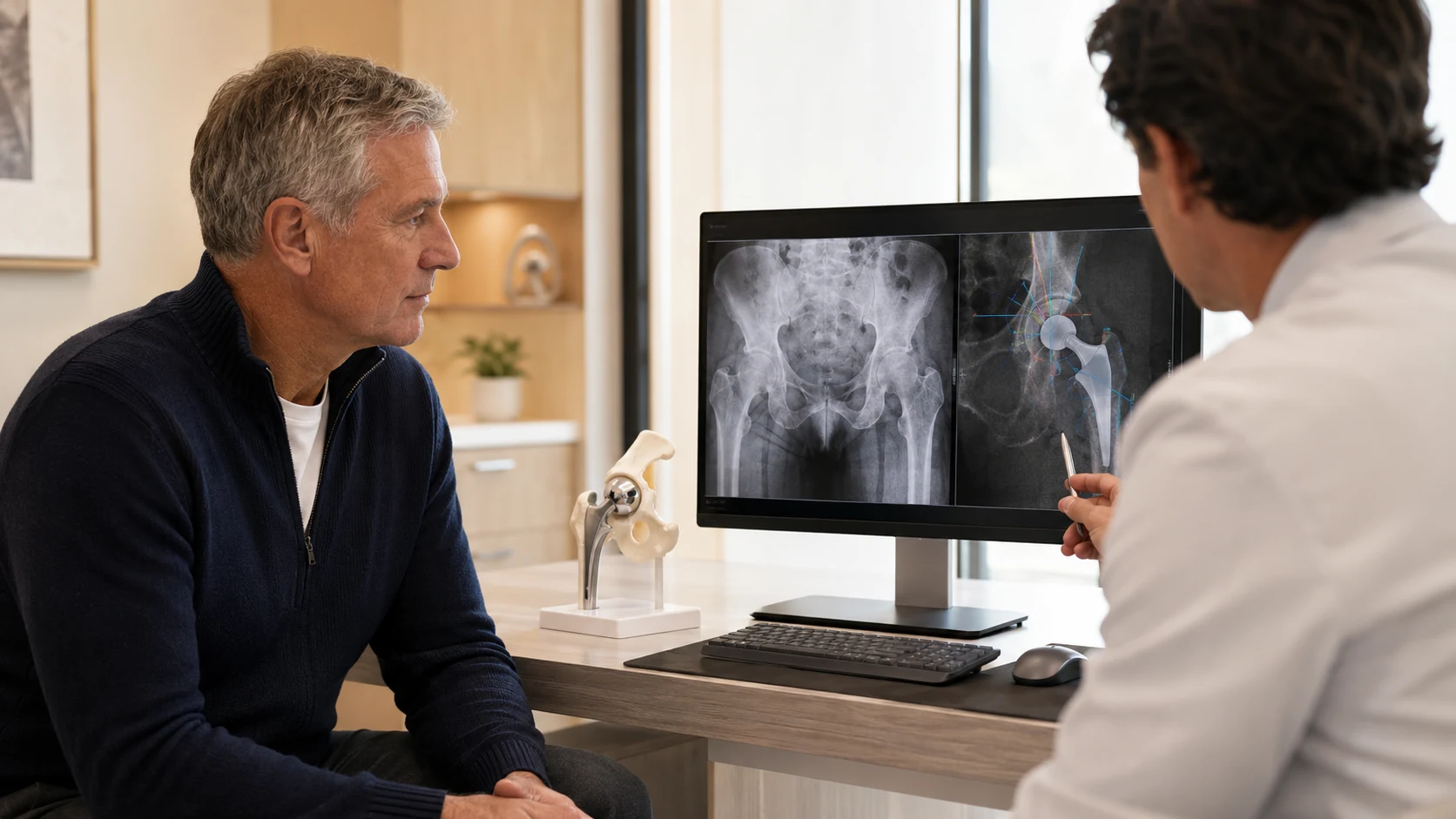
Total hip replacement is considered when hip joint damage causes substantial pain, stiffness and loss of function despite appropriate non-operative care. The decision brings together diagnosis, imaging, health, activity goals and the trade-offs of surgery. Hip replacement in Abu Dhabi is performed at Healthpoint Hospital, serving patients throughout the UAE.
CHAPTER 01 · WHAT IS REPLACED?
Total hip replacement addresses both sides of the damaged joint: the acetabular socket is resurfaced with a cup and liner, and the femoral head is replaced with a ball attached to a stem.
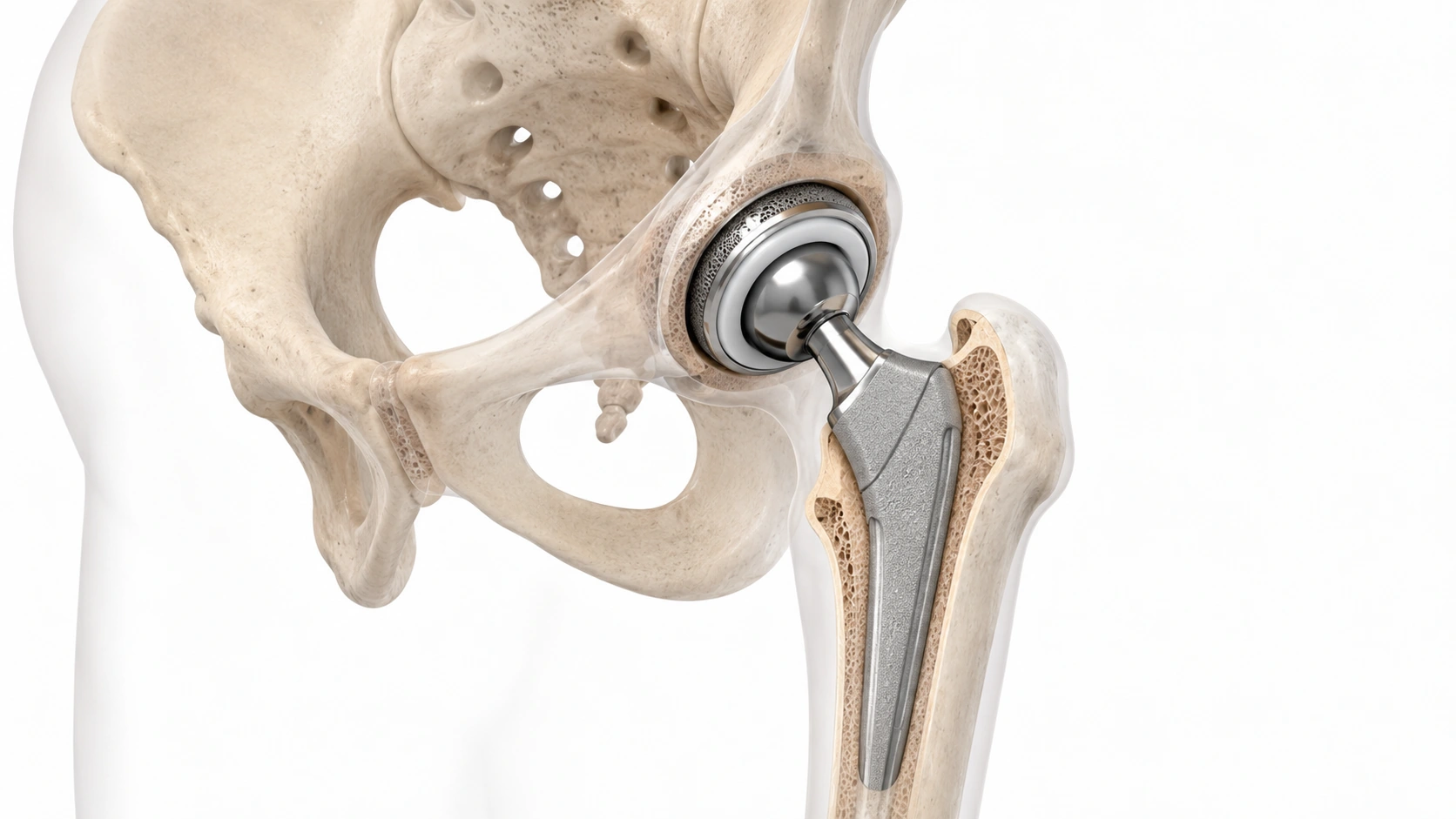
The damaged socket surface is prepared and an acetabular component with a bearing liner is positioned according to the surgical plan.
The femoral head is removed and a stem with a new ball is inserted to recreate the hip articulation and restore stable movement.
CHAPTER 02 · SUITABILITY
Age alone does not decide suitability. The consultation brings together the diagnosis, functional limitation, previous treatment, imaging and the factors that may influence risk and recovery.
The symptoms, examination and imaging should tell a coherent story before replacement is discussed.
Walking, sleep, work, shoes and socks, exercise and independence help define the real burden.
Relevant rehabilitation, activity modification and symptom treatments should be considered in context.
Radiographs help assess the joint, bone quality, anatomy and the reconstruction that may be required.
General health, medications, smoking, diabetes, weight where relevant, home support and rehabilitation planning can affect risk and recovery.
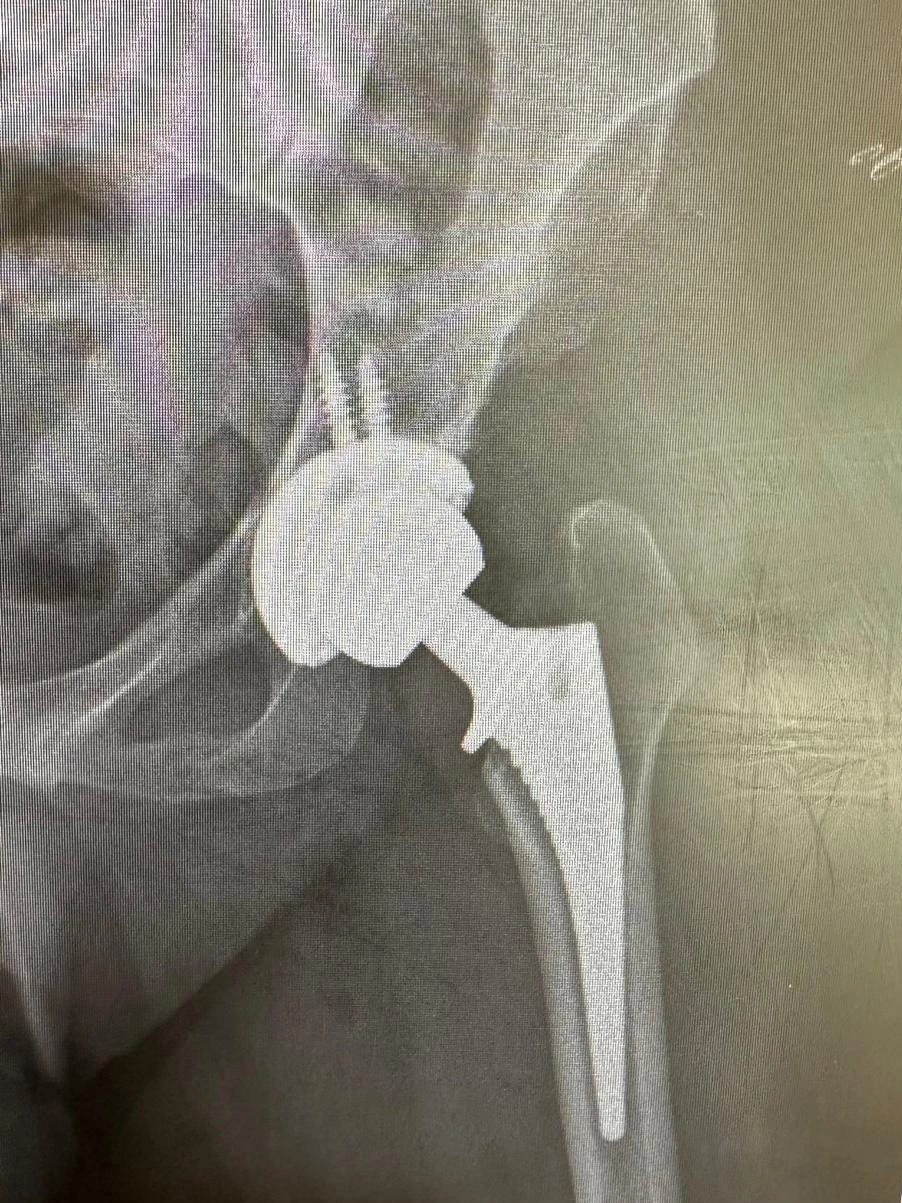
“The X-ray can show the reconstruction. Suitability for surgery is decided from the whole clinical picture.”
CHAPTER 03 · IMAGING & IMPLANT PLANNING
Radiographs help assess joint damage, bone quality and anatomy. Additional imaging is selected when a specific question about bone, deformity or planning needs more detail.
A postoperative film can document the acetabular and femoral components and their relationship to the surrounding bone.
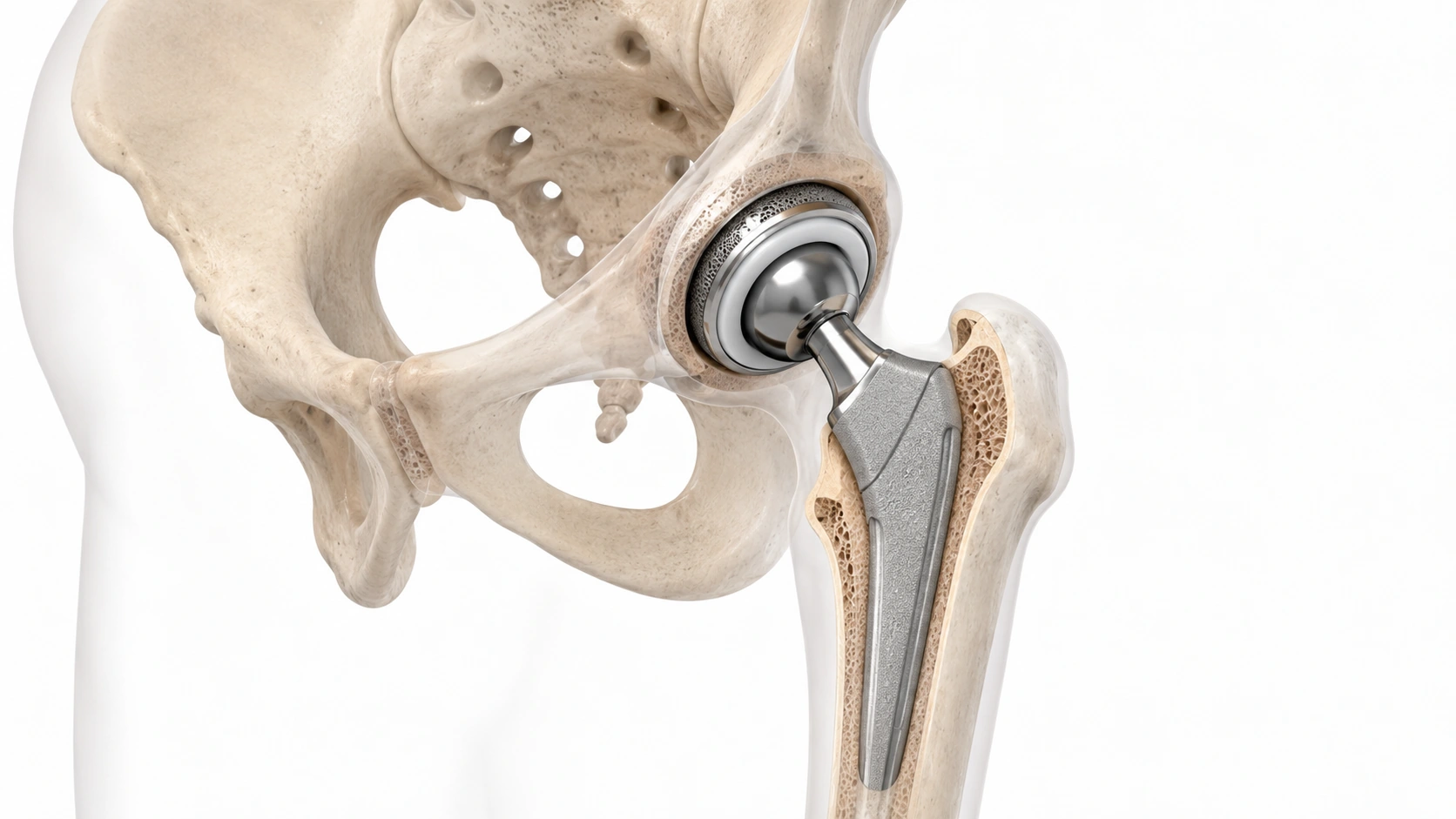
An educational illustration shows the acetabular and femoral components used to recreate the ball-and-socket articulation.
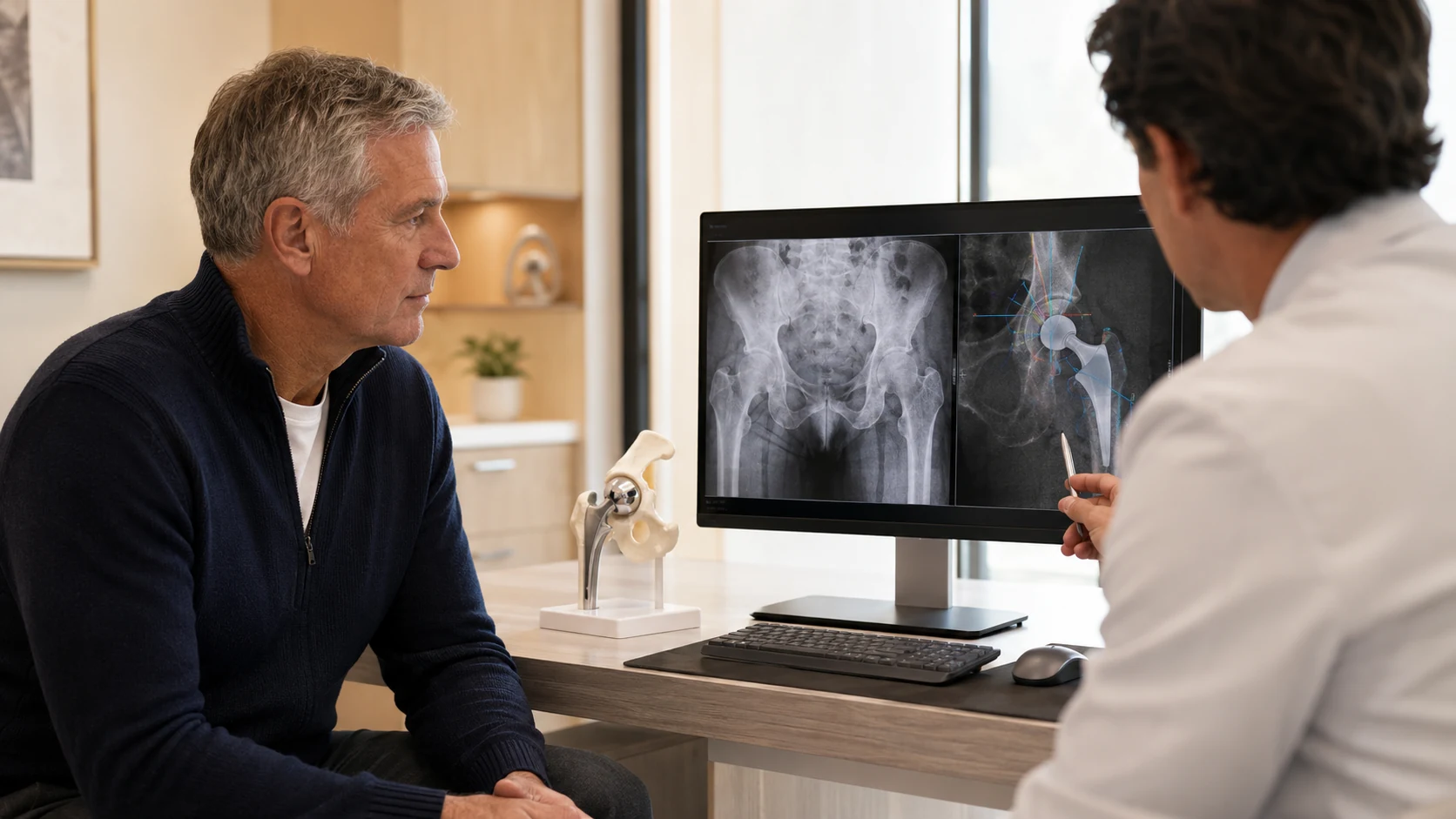
Planning considers anatomy, imaging, implant strategy, health and the functional goals the patient wants to regain.
CHAPTER 05 · THE OPERATION
During total hip replacement, the damaged femoral head is removed, the acetabulum is prepared for the socket component, the femur is prepared for the stem and the new ball is connected. The surgeon checks stability, movement and reconstruction before completing the procedure.
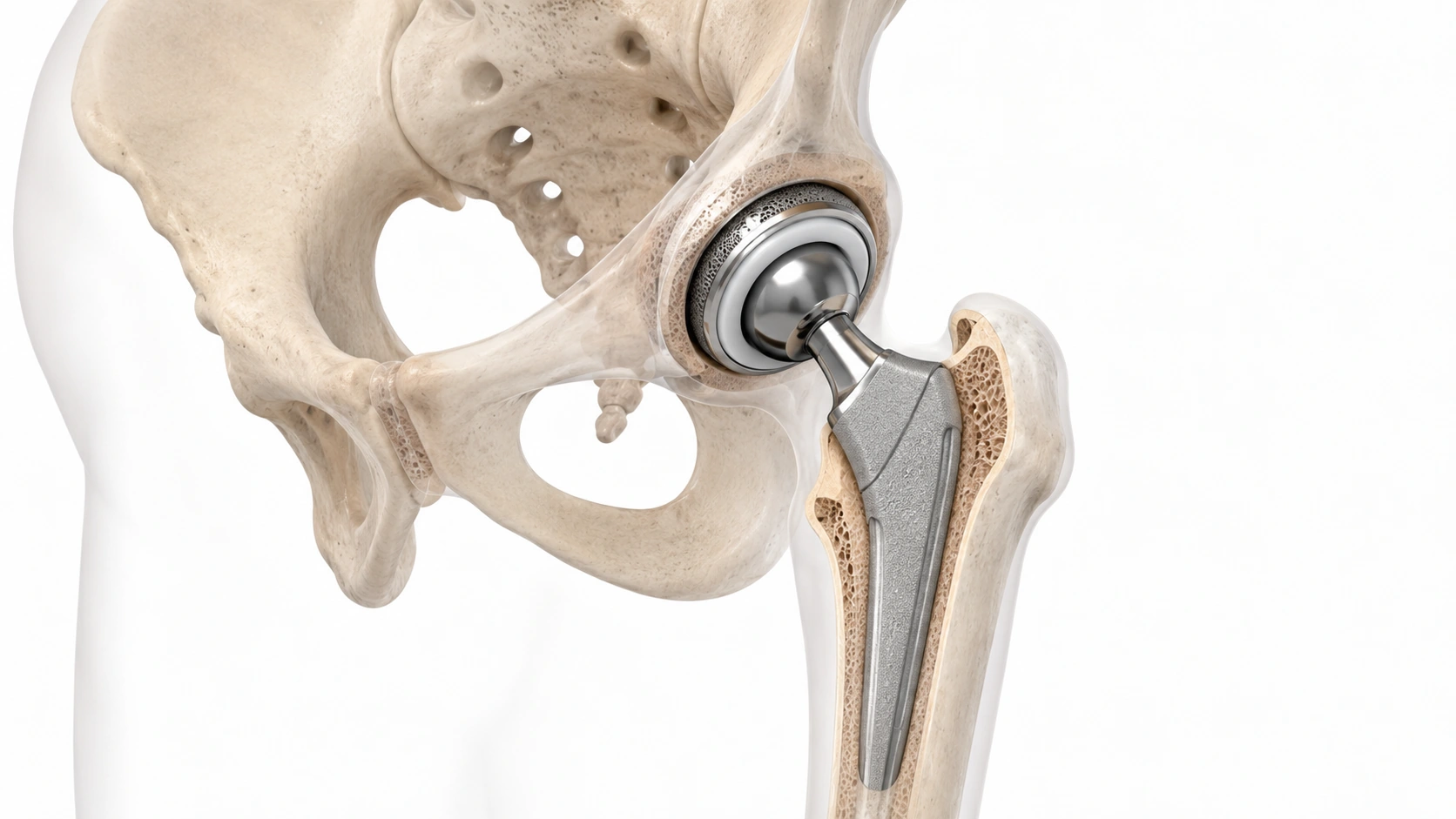
The damaged femoral head is removed and the acetabulum and femur are prepared according to the surgical plan.
The socket, liner, stem and new ball are positioned using the planned implant strategy.
Stability, movement, leg length and soft-tissue tension are assessed before finalising the reconstruction.
The postoperative plan moves toward safe mobility, wound recovery and progressive rehabilitation.

RECOVERY · FUNCTION
Early rehabilitation focuses on safe mobility, wound recovery and restoring useful movement. Strength, endurance and confidence are rebuilt over time according to the individual operation, starting point and goals.
RELATED HIP ROUTES
Use the related pages when the main question is arthritis, impingement, revision or the overall Hip overview.
PRIMARY HIP REPLACEMENT FAQ
General information only. The appropriate implant strategy and recovery plan require an individual clinical assessment.
Request an appointmentTotal hip replacement removes the damaged femoral head and resurfaces the socket with prosthetic components, creating a new ball-and-socket articulation.
It may be considered when joint damage causes substantial pain, stiffness and loss of function despite appropriate non-operative care, and the overall assessment supports surgery.
Hip replacements use combinations of metal, ceramic and highly cross-linked polyethylene components. The implant choice depends on the patient and surgical plan.
Components may use cementless fixation, cemented fixation or a combination, depending on bone quality, implant design and the surgical plan.
Recovery is progressive and varies by individual. Early goals include safe mobility and wound recovery, followed by strength, endurance and return to everyday function over time.
Robotic-assisted systems can support planning and component positioning in selected hip replacement procedures. The surgeon remains responsible for the operation and clinical decisions.
A SURGICAL DECISION, INDIVIDUALISED
You do not need to arrive having chosen an implant or technology. Bring previous imaging, treatment history, the symptom timeline and the activities you want to regain.

CONSULT THE SPECIALIST
Prof. Hanna is a UK board-certified consultant orthopaedic hip and knee surgeon at Healthpoint Hospital, Abu Dhabi. His clinical interests include primary and revision hip and knee replacement, robotic-assisted joint replacement and arthroscopic treatment of selected sports and soft-tissue conditions.
 Google ReviewsIndependent patient feedback
 DoctifyVerified patient feedback