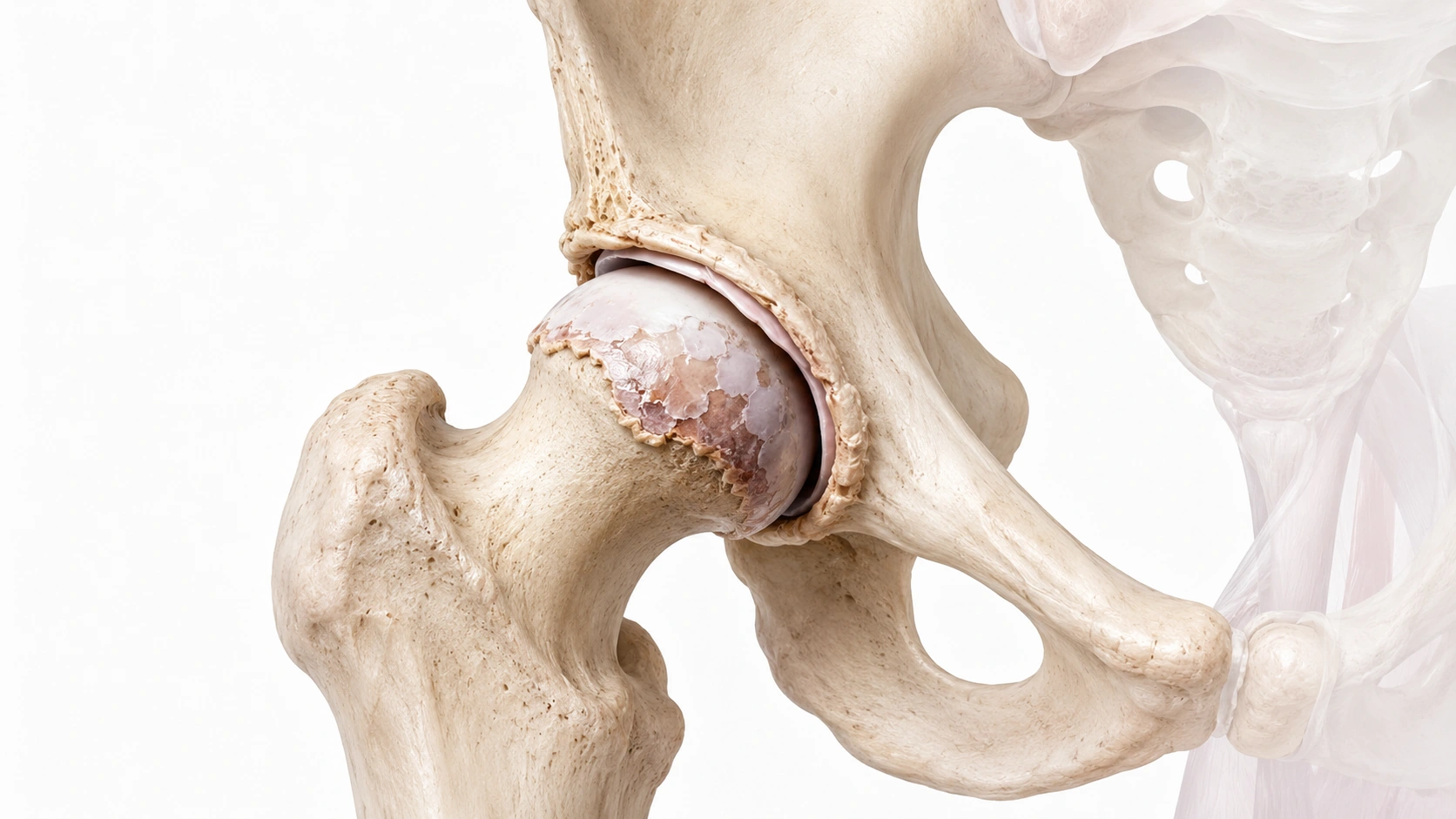
Hip arthritis changes the joint.The decision depends on how it changes movement and daily life.
Hip osteoarthritis can cause groin pain, stiffness and loss of movement, but the impact differs from person to person. The assessment connects the symptom pattern, examination, function and imaging where it adds useful information before a proportionate treatment plan is discussed. For hip arthritis treatment in Abu Dhabi, assessment is available at Healthpoint Hospital.
Choose the closest description. Each answer points to what may be useful to assess; it does not diagnose the cause of the symptoms.
PATTERN 01AN EDUCATIONAL GUIDE
Pain is felt deep in the groin or front of the thigh.
This pattern is common with hip joint problems including osteoarthritis, but other causes can overlap. Assessment looks at where pain is felt, what movements provoke it and whether hip motion reproduces the symptoms.
Before treating “arthritis”, confirm what is actually limiting the hip.
The consultation connects symptoms to hip movement, gait and the life they are interrupting. Structural arthritis may be relevant, but it should not replace clinical reasoning.
01
Is the hip joint the main pain source?
Back, knee, tendon and other referred pain can create a different pattern.
02
Where is the pain felt?
Groin, thigh, buttock and lateral pain patterns provide useful clues but are not diagnostic on their own.
03
How does the hip move?
Flexion, rotation, gait and functional movement help show how much the joint is restricting activity.
04
What has changed in daily function?
Walking, shoes and socks, stairs, sleep, work, exercise and independence matter more than a pain score alone.
05
Does the story suggest another process?
Traumatic, inflammatory, infective and referred causes need consideration when the pattern does not fit routine osteoarthritis.
EXAMINATION / 02
“The useful question is not only what the X-ray shows, but what the hip is preventing the person from doing.”
CHAPTER 03 · IMAGING
Imaging describes the joint.It does not measure the person.
When imaging is useful, plain X-rays can show joint-space loss, osteophytes and other structural changes. Additional imaging is selected only when a specific question is likely to change the diagnosis or treatment plan.
Educational illustration of osteoarthritic joint change. Clinical imaging is interpreted together with symptoms and examination.
SELECTED OBSERVATION 01 / 03
Joint-space loss
Loss of joint space can be one radiographic feature of hip osteoarthritis. It is interpreted alongside symptoms, examination and the other views rather than used as a stand-alone measure of pain.
CHAPTER 04 · OPTIONS
Treatment is a decision map. Not a conveyor belt to surgery.
The route depends on symptoms, physical function, diagnosis, general health, goals and previous care. Options may be combined, revisited or ruled out after an individual assessment.
ROUTE 01
BUILD CAPACITY
Use movement to preserve what the hip can do.
What it may include
Education, appropriate exercise, mobility and strength work, pacing and an activity plan matched to the person’s starting point.
What it cannot promise
Exercise does not reverse established joint damage, but it may improve pain, confidence and physical function. Response varies.
↔These routes are not mandatory steps. A person may remain with non-operative care, combine several approaches or discuss replacement when the complete picture supports it.
CHAPTER 05 · DECISION
When does hip replacement enter the conversation?
Not because an X-ray looks worn. Replacement may become relevant when persistent pain, stiffness and meaningful functional limitation remain despite appropriate non-operative care, and the diagnosis and imaging support that route.
01
The diagnosis fits
The symptom pattern, examination and imaging point to the hip joint as the main problem.
02
Life is meaningfully limited
Walking, sleep, work, self-care or independence are affected enough to justify the trade-offs.
03
Other care is proportionate
Relevant non-operative options have been considered, tried or are no longer suitable.
04
The trade-offs are understood
Benefits, limitations, risks, rehabilitation and expectations are discussed before deciding.
IF REPLACEMENT BECOMES PART OF THE DISCUSSION
Understand the surgery before deciding on it.
The detailed replacement pages explain the primary and revision pathways.
For one person, success may mean walking through the working day. For another, it may be shoes and socks, travelling, stairs, exercise or preserving independence. Those goals belong in the decision from the start.
Walking & everyday mobility
Shoes, socks & low seats
Work & family life
Exercise & active living
RELATED HIP ROUTES
Hip pain can follow more than one pathway.
Use the related pages when the main question is impingement, replacement or a problem with an existing implant.
HIP ARTHRITIS FAQ
Questions worth answering before treatment is chosen.
General information only. A diagnosis and personal recommendation require an individual clinical assessment.
Hip osteoarthritis is degeneration of the hip joint that can cause pain, stiffness and reduced function. Symptoms and X-ray changes vary between people, so treatment is based on the full clinical picture.
02Where is hip arthritis pain usually felt?+
Pain is often felt in the groin or front of the thigh and may also be felt around the buttock or side of the hip. The examination helps determine whether the hip joint is the main source.
03Do I always need an MRI for hip arthritis?+
No. Plain X-rays are commonly used when imaging is needed to assess osteoarthritis. MRI or other imaging is reserved for selected questions when it is likely to change management.
04Can exercise help hip arthritis?+
Appropriate exercise and physical therapy can help maintain movement, strength and function. The programme should be tailored to symptoms, ability and general health.
05Does hip arthritis automatically mean hip replacement?+
No. Many people are treated without surgery. Replacement is considered when symptoms and loss of function remain substantial despite appropriate non-operative care and the overall assessment supports surgery.
06When is total hip replacement discussed?+
Total hip replacement may enter the discussion when joint damage causes significant pain, stiffness and functional limitation despite appropriate non-operative care, and the benefits and trade-offs have been reviewed.
07Which hip symptoms need urgent assessment?+
Seek urgent medical assessment for severe pain after an injury with inability to bear weight or deformity, a hot swollen joint with fever, or new leg swelling with chest pain or sudden breathlessness.
YOUR CLINICAL STORY
The scan is one part of the story.
Bring the symptoms, the timeline, previous imaging and the activities hip pain is changing. The consultation connects those pieces before the treatment conversation begins.
Prof. Hanna is a UK board-certified consultant orthopaedic hip and knee surgeon at Healthpoint Hospital, Abu Dhabi. His clinical interests include primary and revision hip and knee replacement, robotic-assisted joint replacement and arthroscopic treatment of selected sports and soft-tissue conditions.